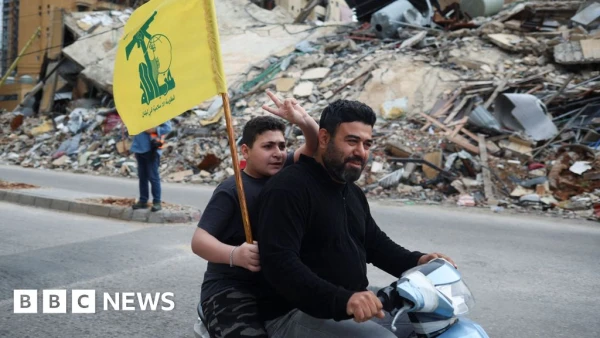
A temporary ceasefire between Israel and Lebanon has come into effect, marking a potential turning point in six weeks of escalating cross-border violence. The agreement, announced by U.S. President Donald Trump, began at 17:00 EST on April 16th and is set to last for ten days, with provisions for extension if negotiations show progress.
"I hope Hezbollah acts nicely and well during this important period of time," Trump later urged on social media, highlighting the complex role of the Iran-backed militant group, which operates within Lebanon but is not formally part of its government.
Under the terms of the deal, Israel retains its right to self-defense against any attacks, while Lebanon is required to take "meaningful steps" to prevent Hezbollah and other armed groups from targeting Israeli interests. The agreement also reaffirms the Lebanese security forces' exclusive responsibility for national security and calls for continued U.S.-facilitated talks to resolve outstanding issues.
Israeli Prime Minister Benjamin Netanyahu welcomed the truce as an "opportunity to make a historic peace agreement," while Lebanese Prime Minister Nawaf Salam expressed hope it would allow displaced civilians to return home. Hezbollah has signaled conditional acceptance, demanding a comprehensive halt to attacks across Lebanon and restrictions on Israeli military movements.
Despite the ceasefire, significant challenges remain. Netanyahu has stated that Israeli troops will maintain a presence up to 10 kilometers inside southern Lebanon, an area he describes as a "security zone." This stance has drawn criticism from Lebanon and international observers, who view it as a potential occupation. UN data indicates over 1.2 million people have been displaced in Lebanon, primarily from the south, where extensive damage from Israeli strikes has been documented.
The path to the agreement involved rare direct talks in Washington, though the announcement reportedly caught some Israeli officials by surprise. Questions also linger about the ceasefire's connection to broader regional tensions, particularly involving Iran, with conflicting statements emerging about whether Lebanon was included in a separate U.S.-Iran truce.
International reactions have been cautiously optimistic. UN Secretary-General António Guterres commended the U.S. mediation effort, and European leaders urged full respect for Lebanon's sovereignty. The coming days will test whether this fragile pause in hostilities can evolve into a more durable peace, or if underlying tensions will reignite conflict along the volatile border.