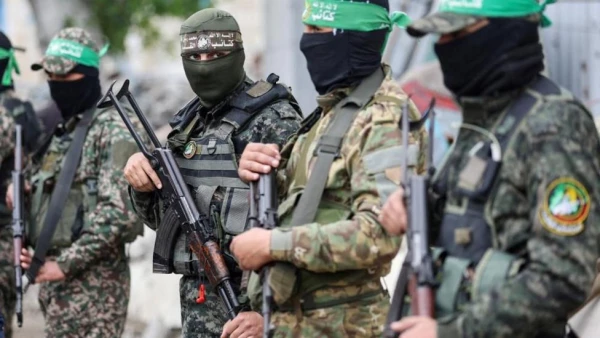
Hamas has formally rejected a U.S.-backed plan to disarm Gaza, according to a senior Palestinian official involved in negotiations. The militant group refuses to discuss demilitarization until Israel fully implements all provisions of the initial ceasefire agreement.
A high-ranking Palestinian official, speaking on condition of anonymity, revealed that Hamas has informed regional mediators it will not engage in talks about the second phase of the peace plan until Israel completes its obligations from the first phase. The official accused Nickolay Mladenov, the U.S.-appointed high representative for Gaza, of showing bias toward Israel's position.
"We are waiting for Mladenov to provide a clear timetable for Israel to fulfill the remaining obligations of phase one, along with guarantees to halt Israeli violations, before any discussion of phase two begins," a senior Hamas official told reporters.
The first phase of the ceasefire, which took effect in October, included the release of Israeli hostages in exchange for Palestinian prisoners and a partial Israeli military withdrawal from Gaza. The second phase, announced in mid-January, aims to establish a permanent end to hostilities through Gaza's demilitarization and a complete Israeli withdrawal.
Hamas officials outlined specific demands that must be met before disarmament talks can proceed:
- Completing full Israeli military withdrawals from Gaza
- Reopening the Rafah crossing and all other border crossings
- Allowing sufficient humanitarian aid and commercial goods to enter
- Enabling the Palestinian National Committee for Gaza Administration to operate
- Restoring electricity and water facilities
- Providing heavy machinery for rubble removal
- Rehabilitating hospitals and operating bakeries
According to the Palestinian official, Hamas views weapons as tied to a comprehensive solution guaranteeing Palestinian self-determination rather than partial arrangements. The official noted that Mladenov's plan "aligns with the Israeli position" by linking all issues to disarmament without providing financial support for reconstruction.
Last month, Mladenov presented a detailed framework to the UN Security Council for Palestinian armed groups to decommission their weapons, linking compliance to reconstruction efforts in the devastated territory. He described the choice facing Gaza as "between a renewed war, or a new beginning."
Israeli Prime Minister Benjamin Netanyahu has previously warned that Hamas would be disarmed "either the easy way or the hard way." Israel maintains it will not advance peace talks without progress on Hamas's disarmament.
The deadlock comes amid ongoing violence, with Gaza's Hamas-run health ministry reporting over 72,330 Palestinian deaths since the conflict began in October 2023, including 757 since the ceasefire started in October 2025. The war was triggered by Hamas's October 2023 attack on Israel that killed approximately 1,200 people and took 251 hostages.
A Hamas delegation was scheduled to meet with Egypt's intelligence chief in Cairo on Tuesday before departing, though prospects for breakthrough appear dim as both sides maintain firm positions on the sequencing of ceasefire implementation.