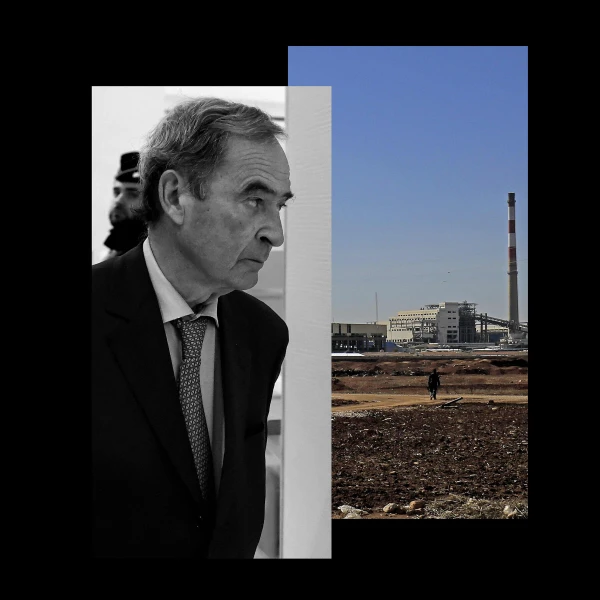
In a landmark decision that could reshape corporate accountability worldwide, a Paris court has convicted cement manufacturer Lafarge and two of its former top executives for financing terrorist groups in Syria. The ruling marks the first time a corporation has been found criminally liable for enabling terrorism in France, and possibly globally.
Former CEO Bruno Lafont, 69, and former deputy head of operations Christian Herrault, 75, were sentenced to six and five years in prison respectively, with both beginning their sentences immediately after Monday's verdict. The court found that between 2013 and 2014, Lafarge paid approximately $6.5 million to the Islamic State and other terrorist organizations to maintain operations at its Syrian cement plant.
Judge Isabelle Prévost-Desprez delivered the scathing four-hour verdict, which also imposed significant financial penalties on the company. Lafarge, now owned by Swiss conglomerate Holcim, must pay about $1.3 million in fines for financing terrorism and an additional $5.3 million for violating international sanctions.
"This verdict is exceptional," said Claire Tixeire of the European Center for Constitutional and Human Rights, who helped bring the case alongside colleague Anna Kiefer of human rights organization Sherpa. "Seeing a chief executive sentenced to prison for corporate crimes of this magnitude sets a powerful precedent."
The prosecution presented extensive evidence including email correspondence documenting agreements with terrorist groups and a travel document bearing the Islamic State flag that authorized Lafarge vehicles to pass through checkpoints. The document stated: "In the name of Allah the Merciful, the mujahideen are asked to let this vehicle transporting cement from the Lafarge plant pass through checkpoints, following an agreement with the company for the trade of this material."
Former employees testified that while European colleagues were evacuated to safety, Syrian workers were forced to continue operations in active war zones, crossing checkpoints under sniper fire and facing constant threats of kidnapping and bombing—all while their employer was financing the very armed groups terrorizing civilians.
The defense strategy echoed that of industrialists tried at Nuremberg eighty years earlier, with executives claiming they were merely pursuing business objectives and lacked knowledge of how their funds were being used. Prosecutors successfully countered this argument with detailed documentation showing direct corporate involvement with terrorist organizations.
This case represents a significant departure from traditional war crimes prosecutions, which have typically focused on military and paramilitary figures rather than corporate entities. Lafarge faces additional charges of complicity in crimes against humanity in a separate case, potentially opening a new chapter in how corporations are held accountable for their actions in conflict zones.
The verdict establishes that corporations can no longer claim ignorance or business necessity when their operations directly support terrorism, setting a precedent that could influence corporate behavior and legal accountability worldwide.