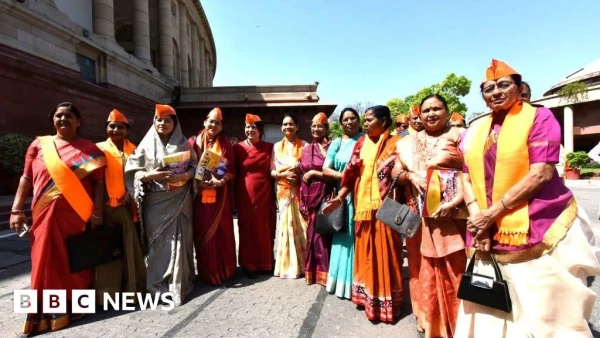
India stands at a pivotal moment in its political evolution as the government prepares to introduce a landmark constitutional amendment that would reserve one-third of parliamentary and state assembly seats for women. This reform, which requires a two-thirds majority for passage, is set to be debated during a special three-day parliamentary session beginning Thursday.
Currently, women represent only about 14% of India's 543-member lower house of parliament. The proposed legislation would increase this representation to approximately 33%, bringing India closer to global standards for gender parity in legislative bodies.
Prime Minister Narendra Modi has championed the initiative, describing it as "among the most significant decisions of our times" and a historic step toward honoring women's empowerment. He noted that the quota enjoys unanimous backing and is scheduled for implementation by 2029.
"We support reserving 33% seats for women based on the current strength of parliament," said John Brittas, an MP from the opposition Communist Party of India (Marxist). "We also want a further freeze on expanding overall seats in the parliament until population trends stabilize. We object to the haste in convening this session in the middle of an election season."
The women's quota proposal has become intertwined with a separate but related initiative: a population-based redrawing of parliamentary constituencies based on 2011 census data. This delimitation process would likely expand the lower house from 543 to about 850 seats.
This expansion has sparked significant controversy, particularly among opposition parties in southern India who fear their regions could lose political influence. Southern states like Tamil Nadu, Kerala, Karnataka, and Telangana have lower population growth rates but stronger economic indicators compared to northern states.
Tamil Nadu Chief Minister MK Stalin has called the delimitation plan a "massive historic injustice," staging protests that included burning a copy of the proposed bill. He questioned whether southern states were being "punished" for their economic success and lower fertility rates.
Legal experts have raised questions about the implementation details. Arghya Sengupta of the Vidhi Centre for Legal Policy noted that while the bill raises the cap on the lower house to 850 seats, "the basis for this number is unclear and does not appear to be proportionate to population growth recorded in the 1971 and 2011 census."
Additional complexities include how seats will be specifically reserved for women within the expanded parliament and how this will intersect with existing reservations for Scheduled Castes and Scheduled Tribes. The government's decision to use 2011 census data rather than waiting for more recent figures has also drawn scrutiny, though officials argue that waiting would delay implementation beyond 2029.
India's Constitution mandates periodic redrawing of constituencies to reflect population changes, but this process has been paused since the 1970s due to concerns about regional imbalances. The current government's push represents a significant departure from this longstanding caution, setting the stage for one of India's most substantial political transformations in decades.