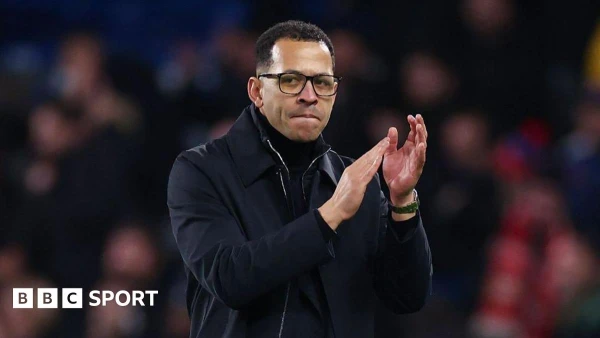
Liam Rosenior's brief tenure as Chelsea manager came to a sudden end less than 24 hours after he publicly criticized his players following Tuesday's defeat at Brighton—a moment that encapsulated the fundamental issues that ultimately led to his dismissal.
While Rosenior frequently defended his squad, sometimes to his own detriment, his comments about players "respecting the ball" after a controversial pre-match huddle in March marked a turning point. That incident, which saw players encircling referee Paul Tierney before a 1-0 loss to Newcastle, sparked a disastrous run of five consecutive defeats without scoring—Chelsea's worst such sequence in 114 years.
From the early days of his appointment, signs emerged that the dressing room remained unconvinced by the former Hull City boss, who had never managed in the Premier League despite relative success at Strasbourg. The Spanish-speaking contingent proved particularly skeptical, with Marc Cucurella and Enzo Fernandez both discussing potential moves to Spain during the March international break.
"Leadership meetings grew increasingly quiet as Rosenior's authority waned," multiple sources revealed, noting the head coach struggled to generate the participation he had hoped for.
Team news leaks surrounding both legs of Chelsea's Champions League last-16 tie against Paris Saint-Germain reportedly originated from within the dressing room, with one remarkable leak before Rosenior's final match at Brighton allegedly coming from Cucurella's barber. Players were also captured on video regularly ignoring Rosenior's inexperienced backroom staff, with one player even dubbing him "the supply teacher."
Privately, sources close to several players confirmed Rosenior began losing authority as he attempted to implement more of his own ideas after initially following his predecessor's blueprint during his first six weeks.
Tactical decisions came under intense scrutiny. PSG sources noted Rosenior's approach in their 8-2 aggregate victory was too open, allowing the French champions to exploit Chelsea's vulnerabilities. The decision to start young centre-back Mamadou Sarr at right-back proved particularly costly in the second leg, with his error leading to an early Khvicha Kvaratskhelia goal in a 3-0 defeat.
Additionally, Moises Caicedo was reportedly covering excessive ground following Rosenior's shift from a double-pivot to a single-pivot midfield system.
While most players regarded Rosenior as a decent person—and he remained more popular with English squad members—injuries to Trevoh Chalobah, Cole Palmer, and Reece James later in his tenure further complicated matters.
The glum faces in the directors' box during Chelsea's uncompetitive performance at Brighton represented what one senior source described as the turning point in the club's stance. Until then, those responsible for his appointment had hoped he would steady the ship until season's end.
Ultimately, Chelsea's hierarchy concluded the club would have a better chance without Rosenior for their remaining matches, both in their pursuit of European qualification and FA Cup success. Unlike his predecessor, Rosenior failed to maintain positive relationships within the club's hierarchy—reflected in his exit statement being 68 words shorter than that of his forerunner.
The decision aims to benefit Chelsea in both the short and long term, with the club now seeking a new voice to lead one of European football's most attractive managerial positions. Marco Silva emerges as a leading candidate this summer, with his Fulham contract expiring and his representation by agent Jorge Mendes—who maintains close ties with Chelsea's ownership—potentially easing any move.
However, working within Chelsea's current model causes hesitation among coaches who might otherwise be considered. Andoni Iraola, outgoing Bournemouth head coach and a target for Chelsea's leadership group, reportedly prioritizes stability at his next post—a quality not currently associated with the London club. The Spaniard also wants to return to Spain with his family after declining a new Bournemouth deal.
Other potential candidates include Edin Terzic, who led Borussia Dortmund to the 2024 Champions League final; former Chelsea midfielder Cesc Fabregas, earning praise at Serie A club Como; and Xabi Alonso, currently available after leaving Real Madrid earlier this season.
The central question remains whether any prospective manager would express reservations about working within Chelsea's recruitment model—focused on developing younger players—given the club's recent history of managerial turnover.
Chelsea are reportedly contemplating a shift in approach this summer, targeting more experienced signings to complement their young squad. However, this may prove challenging following the club's record £262.4 million loss for the 2024-25 season—the highest pre-tax loss in Premier League history—coupled with the potential absence of Champions League football restricting summer spending.
Despite these challenges, Chelsea remain confident they can attract the right coach, though they are not in active talks with any candidates and don't expect to appoint a permanent replacement until season's end. Their search focuses on finding someone who can win matches and ultimately deliver trophies.