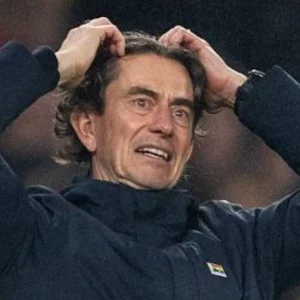
Tottenham Hotspur's decision to part ways with manager Thomas Frank was executed swiftly following a demoralizing Tuesday night defeat to Newcastle United. The call, spearheaded by Chief Executive Vinai Venkatesham and Sporting Director Johan Lange, marked the end of a brief, tumultuous eight-month tenure.
By early Wednesday morning, Venkatesham had formally advised the club's owners, the Lewis family, to pull the plug. Despite mounting fan frustration—and a growing narrative that the hierarchy was ignoring supporters' fury—insiders reveal the ownership was acutely aware of the toxic atmosphere. Having delegated daily operations to Venkatesham last summer, the Lewises quickly green-lit the CEO's recommendation. Frank was officially relieved of his duties during a morning meeting with Venkatesham and Lange.
The Brentford Blueprint Fails in North London
Frank arrived in June with a stellar reputation forged at Brentford, where he secured top-flight promotion and cemented their Premier League status. Spurs hired him to succeed Ange Postecoglou, hoping he would install his trademark positive culture. Instead, his reign collapsed under the weight of player indiscipline, tactical skepticism, and a fractured executive board.
Frank's attempts to mandate respect and accountability were fiercely tested. Early on, he benched a player who arrived late to a pre-match meeting and initially refused to apologize. Similarly, Yves Bissouma was left out of August's UEFA Super Cup squad against Paris St-Germain due to chronic tardiness. While some squad members respected his firm boundaries, others found his leadership lacking.
The dressing room dynamic was further strained by the handling of Cristian Romero. The Argentine defender retained the captaincy despite social media outbursts against the club and a costly red card against Manchester United, leading to murmurs of preferential treatment. Public displays of insubordination also surfaced, notably when Micky van der Ven and Djed Spence ignored Frank's handshake following a home defeat to Chelsea—a fire the manager attempted to extinguish by chalking it up to post-match frustration before confirming they had later apologized.
Tactical Timidity and the Postecoglou Shadow
Transitioning from Postecoglou's dominating aura, several players reportedly viewed Frank as indecisive. Critiques of his tactical philosophy centered on his tendency to react to the opposition rather than asserting Tottenham's own game plan. This cautious approach only fueled the narrative that the Spurs job was simply too big for the Danish coach.
A November Near-Miss
The writing had arguably been on the wall for months. In late November, following a 2-1 loss to Fulham—Tottenham's third consecutive defeat after falling to Arsenal and PSG—one senior executive advocated for Frank's dismissal, pitching Roberto De Zerbi as a potential replacement. The club opted to hold their nerve.
Frank was originally championed by Daniel Levy, the controversial former chairman who ended his 24-year association with the club in September. With Levy out, firing Frank might have been an easy populist win for Venkatesham. However, seeking the kind of long-term stability that allowed Mikel Arteta to thrive at Arsenal, and acknowledging a severe injury crisis, the CEO gave Frank every chance to turn the tide.
Ultimately, a combination of tactical doubts, undeniable dressing room friction, and unrelenting pressure from the stands forced Tottenham's hand, bringing an abrupt end to Frank's time in North London.