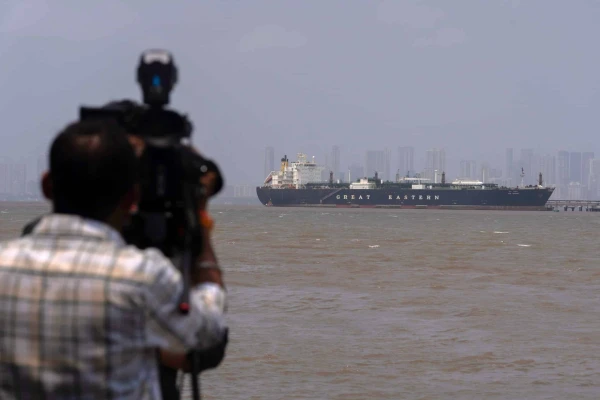
Iran has demanded the right to collect tolls from ships passing through the strategically vital Strait of Hormuz as a precondition for ending its conflict with the United States and Israel and reopening the waterway. This proposal directly challenges a foundational principle of international maritime law: freedom of peaceful navigation.
Reopening the strait would provide immediate relief to the global economy, which has faced severe energy and fertilizer price spikes since the war began on February 28. However, granting Iran toll-collecting authority would solidify its control over a chokepoint responsible for transporting 20% of the world's oil and financially benefit the nation the war was launched against.
U.S. President Donald Trump has prioritized reopening the waterway but has publicly rejected the toll proposal. Analysts note that Gulf oil producers share this opposition, and shipping traffic through the strait remains unchanged despite ceasefire announcements.
Iran's "Tollbooth" Scheme Already Underway
Following the outbreak of hostilities, Iran initially blocked the strait through attacks and threats against commercial vessels, creating immediate energy shortages in Asia and driving up fuel prices worldwide. The country then implemented a covert vetting system, forcing ships to detour near Larak Island. After providing detailed crew and cargo information to intermediaries linked to Iran's Islamic Revolutionary Guard Corps, some vessels were permitted to proceed—with at least two reportedly paying approximately $2 million in Chinese yuan.
Clash with International Maritime Law
A regional official involved in negotiations confirmed that Iran's 10-point peace proposal includes provisions allowing both Iran and Oman to charge ships transiting the strait, with Iran claiming the funds would support reconstruction efforts.
This directly contradicts Article 17 of the United Nations Convention on the Law of the Sea, which guarantees "innocent passage" to non-threatening vessels. Maritime law experts warn that allowing tolls would establish a dangerous precedent.
"Freedom of navigation has always been recognized, including specifically in straits," said Philippe Delebecque, a maritime law professor at Paris' Sorbonne University. "The concern is if the Strait of Hormuz could be closed, then why not the Strait of Gibraltar or the Strait of Malacca?"
Treaty Ratification Status Complicates Matters
While 172 nations have ratified the Law of the Sea Treaty, both Iran and the United States remain non-signatories. However, legal experts emphasize that customary international law still applies.
"Not having ratified the convention doesn't give Iran total freedom of action in the Strait of Hormuz," explained Julien Raynaut of the French Association of Maritime Law. "It remains subject to international law and notably this customary right of passage."
Raynaut further warned that an Iranian toll system could encourage China to consider similar restrictions in the Taiwan Strait.
Economic Implications of Reopening
From a purely financial perspective, economists suggest toll costs would have minimal global impact. A $2 million fee on a tanker carrying 2 million barrels of oil translates to just a $1-per-barrel increase. The Bruegel think tank in Brussels noted that the burden would fall primarily on Gulf oil producers rather than global consumers.
Reopening the strait would instantly return 20% of the world's oil to the market, lowering prices and eliminating a geopolitical windfall for Russia, whose oil has seen increased demand despite sanctions. Oil prices have fluctuated dramatically, reaching $118 per barrel in late March before dropping to approximately $94 following ceasefire news.
Regional Resistance and Security Concerns
Saudi Arabia, while welcoming the ceasefire, has called for keeping the Strait of Hormuz open "without any restrictions." Gulf producers have been forced to shut down approximately 12 million barrels per day of crude production due to the blockade, with existing bypass pipelines insufficient to compensate for the loss.
Western nations strongly object to the proposal, noting that toll revenue would likely benefit the Islamic Revolutionary Guard Corps—an organization designated as terrorist by the U.S. and EU, responsible for Iran's ballistic missile program and domestic political suppression.
Given these significant drawbacks, analysts believe Gulf states would only accept toll collection as a last resort if all alternative options appeared substantially worse.