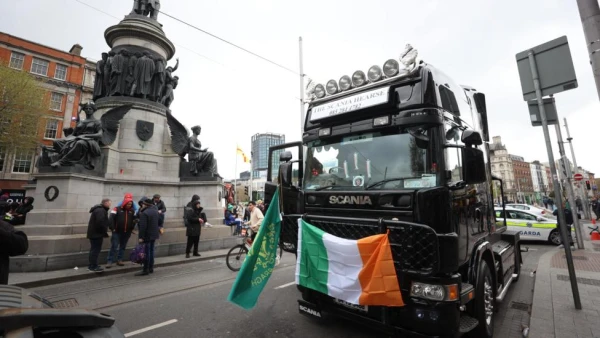
The Irish government is scrambling to finalize a comprehensive fuel support package after four consecutive days of nationwide protests have brought parts of the country to a standstill. Ministers confirmed the emergency measures following what they described as "constructive engagement" with representatives from the haulage and farming sectors, who have been leading slow-moving convoys that have blocked major roads and fuel depots.
Deputy Prime Minister and Finance Minister Simon Harris told RTÉ that a "substantial and significant" package for key economic sectors is being developed, with intensive negotiations expected to continue through the weekend. However, he issued a stern warning: "The blockade has to end."
Prime Minister Micheál Martin painted an even grimmer picture, stating the country is "on the precipice of turning oil away from the country" due to the blockades during a global supply crisis. He emphasized that "self-appointed" groups don't have the right to "close down the country" and confirmed the army is on standby to ensure the law is upheld.
"I'm 100% going to run out of fuel before Monday," said Mary Burke, manager of Raceside Service Station in County Tipperary. Her station received a supply on Thursday that typically lasts four to five days but was exhausted in just seven hours. A second delivery arrived Friday with a €30 cap per customer, but Burke fears she'll be empty by Saturday evening.
The human cost is mounting rapidly. The National Emergency Coordination Group reported that fuel supplies for emergency response vehicles—including ambulances and fire services—are under "increasing pressure." Health ministers issued a joint statement calling the "serious risks to patient safety caused by the blockade of fuel supplies completely unacceptable."
Joseph Musgrave, CEO of Home and Community Care Ireland, reported being "flooded" with reports from staff struggling to access fuel across multiple counties. "On any given day nationally, our carers will call around 15 to 25 ambulances because they've gone to attend their client and their client needs help," he explained. "If they can't get to their client, then those ambulances can't be called."
Protesters remain defiant despite the mounting pressure. Kildare farmer John Dallon, who claimed he was refused entry to Friday's government meeting, said demonstrations could continue for "maybe another week, maybe two weeks. If it takes a month, we are prepared to sit here."
Katie Cooney, a student who traveled from County Cavan to join Dublin protests, highlighted the personal impact: "My commute to college is going to cost 80-100 euro a week." She added that fertilizer prices have skyrocketed from €550 to €800 in just two weeks, threatening farm viability.
Justice Minister Jim O'Callaghan warned of "legal consequences" for protesters, noting that driving licenses could be affected. Meanwhile, police have secured access to the National Critical Infrastructure site at Whitegate Oil Refinery in east Cork, though blockades continue at fuel terminals in Foynes, County Limerick, and Galway Port.
As the standoff enters its fifth day, the government faces the delicate task of addressing legitimate economic concerns while preventing what health officials describe as a "hugely detrimental" effect on patient welfare from missed medical appointments and restricted emergency access.