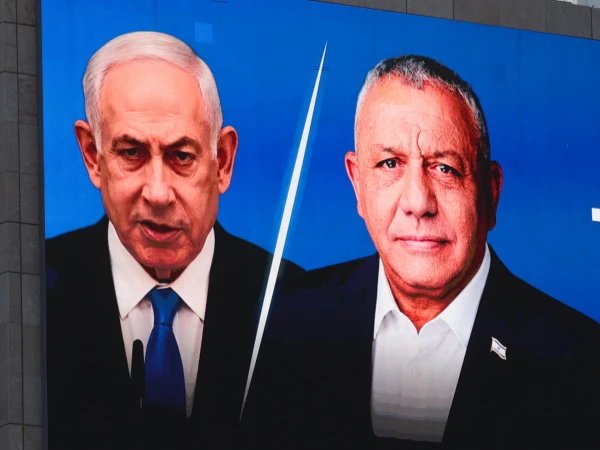
Efforts to forge a unity government in Israel have hit a roadblock after high-stakes negotiations between caretaker Prime Minister Benjamin Netanyahu’s Likud party and opposition leader Gadi Eisenkot’s Yashar party concluded without a breakthrough.
The two sides met at a hotel in Herzliya to discuss potential power-sharing arrangements following October's national elections. According to reports from Israel’s Channel 12, the parties remain fundamentally divided over two major issues: who will hold the premiership first in a rotation agreement, and whether far-right National Security Minister Itamar Ben-Gvir should be included in the coalition.
While Likud insisted on Ben-Gvir's inclusion, Yashar steadfastly demanded his exclusion. In a joint post-meeting statement, both parties acknowledged outlining their positions on various substantive issues and agreed to schedule a follow-up meeting, though no date or further specifics were provided.
Gadi Eisenkot currently holds the mandate to form a government until December 6, with a possible 14-day extension. Following the October vote, his bloc secured 48 seats in the Knesset, leaving them 13 seats short of a majority.
Netanyahu has publicly advocated for a broad unity government, arguing it is essential for national security. Such a coalition would allow a government to take shape without needing the backing of parties representing Palestinian citizens of Israel, which captured a record 19 seats in the election.
Alternative frameworks have also been floated. Former Prime Minister Naftali Bennett, who leads the Together list, reportedly proposed a broader coalition comprising Together, Yashar, Likud, and Avigdor Lieberman’s Yisrael Beiteinu. Under Bennett's proposal, Eisenkot would serve as prime minister first, followed by Netanyahu. However, Yashar has rejected a rotation structure that grants Netanyahu the initial term, while Lieberman has firmly ruled out joining any administration that includes the longtime leader.
Should current unity negotiations collapse entirely, Yashar is reportedly preparing to bring a minority government to a confidence vote in the Knesset before Eisenkot's mandate expires. That maneuver would require external backing from Arab opposition factions, including the Arab Joint List and the United Arab List.