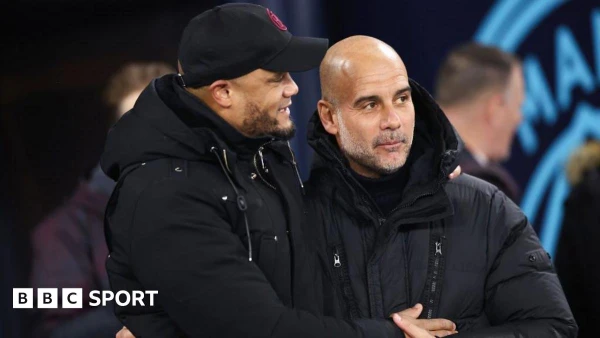
Vincent Kompany's appointment as Bayern Munich manager in May 2024 initially raised eyebrows after his Burnley side suffered relegation. Yet the Belgian has silenced doubters by leading Bayern to Bundesliga glory last season and positioning them for another title, currently holding a commanding 12-point lead. The Bavarian giants also carry a 2-1 advantage into their Champions League quarter-final second leg against Real Madrid.
Kompany's tactical philosophy represents a bold departure from cautious modern approaches. While many top teams adopt conservative attacking strategies against stubborn defenses, Bayern embrace risk with fluid, possession-based football that engages all eleven players from the backline forward.
In their Champions League last-16 tie against Atalanta, who employed aggressive man-marking, Kompany's tactical ingenuity shone through. He instructed players like Serge Gnabry to drop into defensive positions, dragging markers out of position and creating space for teammates. This tactical manipulation resulted in a comprehensive 10-2 aggregate victory.
Juventus manager Luciano Spalletti praised Bayern's approach, remarking: "They showed us a whole encyclopedia of movement and positioning in football."
Movement without the ball forms the cornerstone of Kompany's system. Against Real Madrid, Bayern's defensive line dynamically reshaped during possession phases. Midfielder Joshua Kimmich dropped between center-backs to create numerical superiority, while full-backs Josip Stanisic and Konrad Laimer moved centrally, pulling Madrid's wide midfielders inward.
This tactical choreography opened direct passing lanes to wingers like Michael Olise, who received the ball with space to attack. Olise's direct dribbling, combined with intelligent runs from Gnabry and Luis Diaz, forced defenses backward and created space for Harry Kane to operate.
Bayern's second goal against Madrid exemplified this approach perfectly. Olise's driving run pushed defenders deep, allowing Kane to find space at the edge of the box for a clinical finish.
Defensively, Bayern employ sophisticated pressing schemes that fluidly transition between man-marking and zonal systems. Against Madrid, they pressed aggressively from goal kicks but shifted to structured defensive blocks when opponents advanced into their half. This adaptability, combined with players' willingness to cover for teammates stepping out of position, creates defensive stability without sacrificing pressing intensity.
Kompany's successful transition from managing Championship-level Burnley to elite Bayern Munich demonstrates his tactical flexibility. His playing career—including four Premier League titles and captaincy at Manchester City—grants him immediate respect in the dressing room, while his intellectual approach to leadership has impressed observers.
Journalist Carl Anka recalled on The Athletic FC podcast how Kompany, upon becoming Manchester City captain, studied Richard Lewis's leadership book When Teams Collide: Managing the International Team Successfully, demonstrating his commitment to collective responsibility.
At just 40 years old, Kompany represents football's next tactical evolution. His Bayern side combines Guardiola-esque positional play with greater attacking freedom, suggesting a potential blueprint for the post-Guardiola era. Whether he builds a lasting legacy in Germany or eventually returns to England, Kompany's innovative approach is already reshaping how elite football is played.