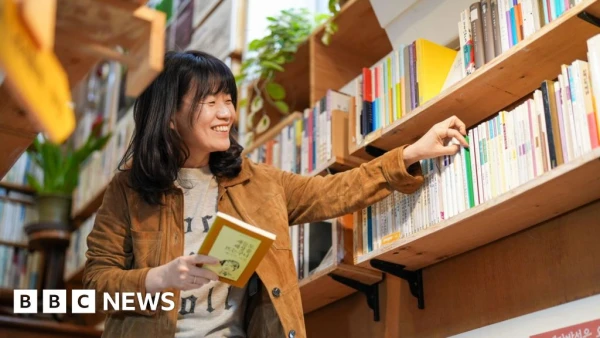
In South Korea, a quiet revolution is unfolding in the literary world as female authors rise to prominence despite facing intense anti-feminist backlash. These writers are transforming personal narratives into bestselling works that challenge traditional norms and create vital community spaces.
When Seen Aromi published her memoir celebrating single life in early 2024, it immediately topped bestseller lists. Women across generations embraced her unapologetic account of independence, finding validation in her rejection of societal pressures. Yet her success triggered a torrent of online abuse, primarily from men who labeled her selfish and accused her of betraying cultural values.
"I'm not claiming that everyone should abandon marriage or look down on married people," Seen explains. "I simply wrote about how making my own choices, prioritizing my desires, has led me to truly enjoy my life. I felt that people were really waiting to hear stories like mine."
Her experience reflects a broader cultural tension in South Korea, where feminism has become a polarizing term despite persistent gender inequality. As public discourse grows increasingly hostile toward feminist perspectives, women are turning to literature as a sanctuary for expression.
This year marked a historic milestone when women swept all six categories of the prestigious Yi Sang Awards—the first such occurrence in the prize's history. The literary landscape is further enriched by the proliferation of guelbang, reading and writing rooms that provide women with communal spaces to create and connect.
Author Eunyu, who established one of these writing rooms in 2011, observes profound transformations among participants. "I've seen countless instances of attendees digesting their pain, restoring their sense of self and confidence through the act of writing," she notes. "While these shifts are deeply personal, when they unfold in a community they can often inspire a chain reaction. In that sense, what we're witnessing here is a slow—but sure—revolution."
The movement gained momentum following South Korea's 2016 MeToo movement, which empowered more women to share their stories. Even as anti-feminist sentiment intensified, female-led writing workshops and reading sessions multiplied, creating accessible entry points for aspiring authors.
Korean women writers are now achieving unprecedented international recognition. Seen Aromi secured a six-figure translation deal with Penguin, while sales of translated Korean books more than doubled in 2024. The global appetite for Korean culture has opened doors for diverse narratives that were previously confined to domestic audiences.
Contemporary Korean literature showcases remarkable variety:
- Gu Byeong-mo's The Old Woman With the Knife features a sixty-something assassin confronting retirement and loneliness
- Kim Cho-yeop's science fiction anthology If We Cannot Go at the Speed of Light explores a scientist's interstellar quest to reunite with family
- Lang Lee's memoir examines intergenerational trauma through her family's history
- Esther Park's historical fantasy The Legend of Lady Byeoksa reimagines a cross-dressing demon-slayer in the Joseon era
These literary achievements occur against a backdrop of what many describe as "stealthy feminism"—subtle resistance to avoid public backlash. Anti-feminist campaigns have targeted celebrities for merely reading feminist literature or carrying empowering accessories, creating a climate where many women feel unable to express their views openly.
The guelbang offer respite from this pressure. At a recent gathering in Daejeon, fifty women traveled from across the country to hear feminist author Ha Mina speak. "We listen to each other's stories here—and that experience can be transformative," Ha explains, describing these spaces as rare opportunities for women to experiment and grow without judgment.
Ha Mina's own journey illustrates the importance of supportive environments. After encountering "toxic, predatory behavior" in male-led writing classes, she found mentorship with a female author who changed her creative trajectory. Her acclaimed work Crazy, Freaky, Arrogant and Brilliant Women investigates depression among Korean women, linking mental health struggles directly to systemic gender issues.
As Korean women writers navigate both celebration and censure, their literary revolution continues to expand—one story, one book, and one writing room at a time.