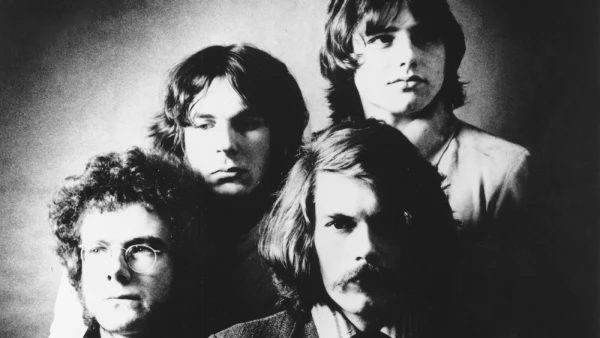
Michael Giles, the visionary drummer and co-founder of the groundbreaking progressive rock band King Crimson, has died at the age of 84. His passing was announced by the band’s record label, DGM, which did not disclose the cause of death.
"Michael’s unparalleled creativity, relentless pursuit of artistic freedom, and groundbreaking musical innovations reshaped the landscape of progressive music," DGM said in a statement. "His legacy as a pioneer and his influence on generations of musicians will endure forever."
Born on March 1, 1942, in Bournemouth, England, Giles began his musical journey in the mid-1960s alongside his brother Peter and guitarist Robert Fripp. Their early project, Giles, Giles, and Fripp, released a single album in 1968—The Cheerful Insanity of Giles, Giles and Fripp—a psychedelic pop-rock record that, while modest in commercial success, laid the foundation for King Crimson’s revolutionary sound.
The band’s formation in 1969 marked a seismic shift in music. With the addition of bassist Greg Lake, multi-instrumentalist Ian McDonald, and lyricist Peter Sinfield, King Crimson released In the Court of the Crimson King, a masterpiece that redefined progressive rock. The album’s opening track, "21st Century Schizoid Man," became an instant classic, blending jazz, rock, and avant-garde experimentation into a seven-minute sonic odyssey. Giles’ drumming on the track was nothing short of revolutionary, weaving intricate rhythms that mirrored the band’s dynamic shifts.
"The Court of the Crimson King" further showcased Giles’ genius, with his percussive artistry elevating the song’s dramatic flourishes. His style, inspired by jazz legend Elvin Jones, brought a new level of sophistication to rock drumming. Pete Townshend of The Who famously called the album "an uncanny masterpiece," a testament to its enduring impact.
Though Giles left King Crimson in the early 1970s, his musical contributions extended far beyond the band. He collaborated with artists like Leo Sayer, Kevin Ayers, and Bryan Ferry, and later formed his own group, the Michael Giles Mad Band, releasing albums in 2009 and 2011. His solo work, including the 2001 album Progress, also left a lasting mark.
In a 2019 interview with Rolling Stone, Giles reflected on the legacy of "21st Century Schizoid Man." "We were doing something different—something unique," he said. "Bringing rock and jazz together wasn’t just a gimmick; it was a new way of thinking. The combination of Greg’s voice, Pete’s lyrics, and the raw energy of the music made it special."
Giles’ influence extended beyond his drumming. His fearless approach to music challenged conventions and inspired countless artists, cementing his place as one of the most innovative musicians of his generation. Though he stepped away from the spotlight in later years, his work remains a cornerstone of progressive rock and a testament to the power of artistic vision.