More than half a century after the Apollo missions etched humanity's first footprints into lunar dust, NASA is gearing up for a triumphant return. In the coming days, the space agency plans to launch Artemis II, an ambitious voyage that will send four astronauts on a trajectory around the Moon.
This mission is the bedrock of a much larger vision: returning humans to the lunar surface and eventually establishing a permanent base. With the Artemis program's price tag already soaring to an estimated $93 billion, many are asking why the United States is investing such astronomical sums to revisit a celestial body it seemingly conquered decades ago.
The answer lies far beyond mere nostalgia. The modern race to the Moon is fueled by a complex mix of resource acquisition, geopolitical maneuvering, and the ultimate dream of interplanetary colonization.
A Treasure Trove of Extraterrestrial Resources
Far from being a barren rock, the Moon is rich in resources that could sustain future missions and benefit life on Earth. Planetary scientists note that the lunar surface harbors rare earth elements—materials notoriously scarce on our home planet—that could potentially be mined. The lunar crust also holds abundant metals like iron and titanium, alongside helium, a crucial element for advanced medical equipment and superconductors.
However, the most highly prized lunar commodity is remarkably familiar: water.
Substantial deposits of water ice have been detected in the deep, permanently shadowed craters at the Moon's poles. Accessing this ice is the golden ticket to sustainable space exploration. Not only can it be purified for drinking, but it can also be chemically separated into oxygen for breathable air and hydrogen for rocket fuel, effectively turning the Moon into a cosmic refueling station.
The New Space Race
While the 1960s Apollo era was defined by Cold War competition with the Soviet Union, today’s rivalry centers on China. The Chinese space program is advancing at a blistering pace, having already landed robotic rovers on the lunar surface and setting a firm target to put humans on the Moon by 2030.
This dynamic has triggered a rush for prime lunar real estate. Under the United Nations' 1967 Outer Space Treaty, no single nation can claim sovereignty over the Moon. Yet, the rules of physical occupation operate in a gray area. Experts point out that while a country cannot technically own a patch of lunar terrain, they can establish operations and utilize the surrounding resources without interference. Essentially, whoever sets up camp first at the most resource-rich sites gets to hold that ground indefinitely.
A Sandbox for Mars
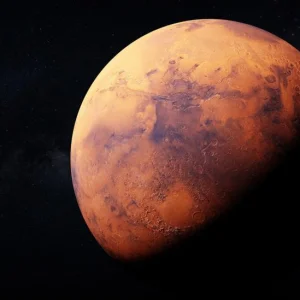
Ultimately, NASA's gaze is fixed on a much more distant horizon: Mars. The agency envisions putting boots on the Red Planet by the 2030s.
Achieving that monumental feat requires overcoming immense technological hurdles, making the Moon the perfect testing ground. Establishing a sustained lunar presence allows scientists and engineers to field-test critical life-support systems in a harsh environment that is still relatively close to home.
"Going to the Moon and staying there for a sustained period is much safer, much cheaper and much easier to be a test bed for learning how to live and work on another planet," notes Libby Jackson, head of space at the Science Museum.
From generating off-grid power to building habitats capable of withstanding extreme temperature swings and lethal space radiation, the Moon serves as a vital proving ground. Trialing these experimental technologies on a neighboring world is vastly safer than risking catastrophic failures millions of miles away on the Martian surface.