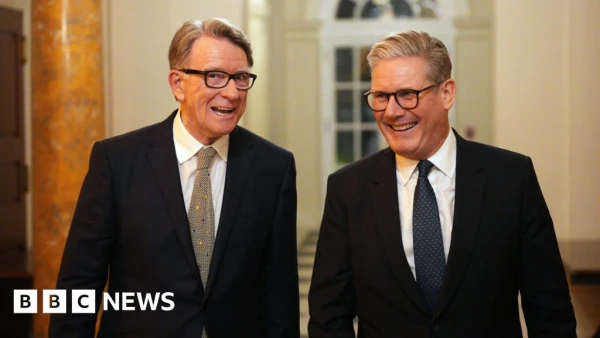
A political crisis has erupted in Westminster following revelations that Lord Peter Mandelson failed his security vetting for the role of British Ambassador to the United States, with Prime Minister Sir Keir Starmer claiming he was kept in the dark about the situation.
The controversy centers on the appointment of the Labour grandee, announced in December 2024, which proceeded despite his subsequent failure to pass developed vetting—a process typically completed before such high-profile appointments are made public.
"It's staggering, shocking, unforgivable," the Prime Minister declared, unleashing unusually strong language about the chain of events.
The timeline reveals a complex sequence: Mandelson's appointment was announced on December 20, 2024. Just under three weeks later, Sir Olly Robbins was appointed as Permanent Under-Secretary at the Foreign Office. Weeks after that, Mandelson failed his vetting, with Robbins learning the result while knowing the ambassadorship had already been publicly confirmed.
Whitehall insiders note the unusual nature of announcing an appointment before vetting completion, particularly for such a sensitive diplomatic posting. "The Foreign Office usually advises prospective employees not to hand in notices until vetting is signed off," one source revealed, highlighting the rushed nature of Mandelson's Washington assignment.
The situation became public when The Guardian reported an internal government debate about whether to include the vetting failure in documents being prepared for Parliament. This revelation prompted the Prime Minister's forceful response and led to Robbins' dismissal from his position.
Defenders of Robbins point to established protocols. Professor Ciaran Martin, a former government official, argued on BBC Radio 4 that Robbins was "a stickler for precedent" and acted correctly by not informing the Prime Minister, given the personal nature of vetting processes.
However, questions persist about why more inquiries weren't made last September when The Independent first reported Mandelson's vetting issues, including published WhatsApp exchanges between their political editor and Downing Street seeking clarification.
The political fallout continues as Sir Keir Starmer prepares to appear before Parliament on Monday, with Robbins invited to testify before the Foreign Affairs Select Committee on Tuesday. This confrontation comes just months after Starmer narrowly survived a leadership challenge from within his own party in February—a crisis also connected to the Mandelson appointment.
Supporters of the Prime Minister argue that the revelation that two other senior civil servants knew about the vetting failure last month demonstrates proper Whitehall procedure was followed in their case, making Robbins' silence more questionable.
The appointment was strategically timed to coincide with Donald Trump's second presidential term, with Mandelson seen as a politically savvy operator who could navigate the unconventional administration. Now, what was intended as diplomatic preparation has become a source of political turmoil, raising fundamental questions about government transparency and accountability.