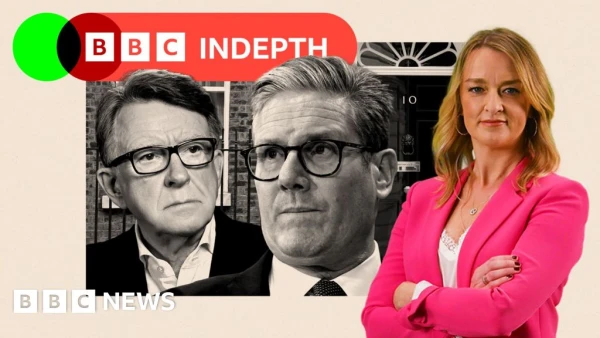
A political storm continues to engulf Prime Minister Keir Starmer's administration over a controversial diplomatic appointment that failed crucial security checks.
Senior government officials, Labour MPs, and the public remain furious as revelations emerge about the botched process that led to former Labour minister Peter Mandelson being offered the prestigious role of US ambassador. Despite the dismissal of top civil servant Sir Olly Robbins, the controversy shows no signs of abating.
"There's no point Keir saying again and again he's angry, when that's exactly how the public feels about him!" a party insider remarked in disbelief.
The appointment, described by one government source as "absolutely mental," has exposed serious flaws in Whitehall's vetting procedures. Mandelson's connections to the late sex offender Jeffrey Epstein were flagged in initial background checks conducted by the Cabinet Office's Propriety Department, but the prime minister's team proceeded with the appointment after asking the peer three additional questions.
Confidential Security Vetting Revealed
What ministers didn't know at the time was that a separate, confidential security check known as "developed vetting" had recommended against Mandelson's appointment. This rigorous process, involving in-person interviews and financial investigations, produced findings that were never communicated to No. 10 or government ministers.
Under the Constitutional Reform and Governance Act, ministers have no authority over security vetting procedures. The vetting agency provides recommendations to Foreign Office officials, who then make final decisions—similar to how a credit agency assesses risk but doesn't approve loans.
In this case, concerns were passed to Sir Olly Robbins, then the most senior official at the Foreign Office. While Robbins was aware of some issues, he reportedly concluded they could be managed. As one former senior official explained: "Vetting is a process, not a point—it's about managing risk, not giving a simple pass or fail."
Political Reality Versus Process
Robbins, who will testify before MPs on Tuesday, faces questions about why he approved the appointment despite the vetting agency's reservations. The political context complicated matters: Mandelson had already passed initial government checks, the White House was expecting his appointment, and as Robbins told MPs last year, "it was clear that the prime minister wanted to make this appointment himself."
Whitehall insiders express astonishment that Robbins would make such a risky decision without creating a formal paper trail. "He is known to be obsessed with process—what did he have to gain by taking a risky decision like this without documentation?" one source questioned.
Conflicting Legal and Ethical Obligations
The situation highlights tensions between legal requirements and ethical responsibilities. While the law mandates confidentiality in vetting processes, the civil service code requires officials to correct errors promptly, present facts accurately, and avoid misleading ministers or Parliament.
Robbins' allies maintain he acted properly, with his predecessor stating: "No 10 wanted a scalp and wanted it quickly." However, government leaders find it "unconscionable" that Robbins didn't alert ministers when they publicly claimed Mandelson had cleared all security checks.
Questions About Government Oversight
Perhaps most troubling is why ministers didn't inquire more deeply about the vetting outcome. A former Foreign Office minister called the oversight "shocking and incompetent," asking why neither Foreign Secretary David Lammy nor the prime minister questioned whether everything was satisfactory.
As one senior Whitehall figure observed: "Olly Robbins has seemingly been sacked for not creating a problem for the prime minister. The great lesson from all this is that the Labour government wants the civil service to save them from their own judgments."
Transparency Concerns
The vetting decision remained hidden for months, only coming to light through journalistic investigation rather than government transparency. Experienced insiders find the official timeline implausible, with one stating: "It is inconceivable that there was a flag from the vetting that did not come up between September and now."
The scandal raises fundamental questions about Starmer's leadership style. As a former chief prosecutor, his failure to personally verify whether all security checks had been completed suggests, according to a party insider, that "he's just never, at any point, gripped the danger."
This episode marks another instance where Starmer has faced criticism for insufficient curiosity about his government's operations, creating perceptions of detachment that continue to undermine his administration's credibility.