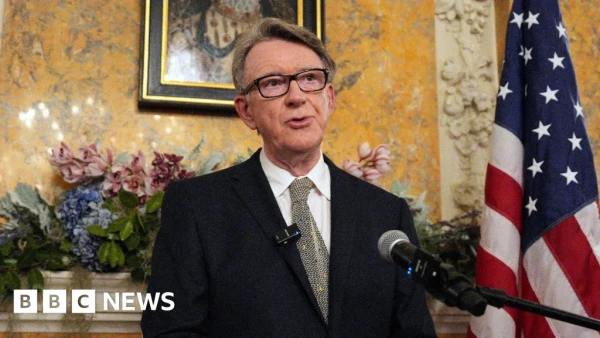
A political storm has erupted after revelations that former Labour minister Peter Mandelson was granted top-level security clearance against the explicit recommendation of the government's vetting agency when appointed as UK ambassador to Washington.
Lord Mandelson received Developed Vetting (DV) status from the Foreign Office in December 2024, despite concerns flagged during his security screening process. This clearance level is required for access to the government's most sensitive classified materials.
Downing Street confirmed this week that the Foreign Office granted clearance "against the recommendation" of the vetting agency, though neither the prime minister nor foreign secretary were informed of this override at the time.
The controversy deepened when Mandelson was removed from his diplomatic post last September after additional information emerged about his connections to convicted sex offender Jeffrey Epstein.
Understanding Developed Vetting
Developed Vetting represents the highest standard of security clearance within the British government, administered by the United Kingdom Security Vetting (UKSV) agency. The intensive process evaluates whether individuals pose security risks through potential blackmail vulnerabilities or intentional misconduct.
Candidates undergo exhaustive background checks examining financial records, criminal history, and security service files. They must complete detailed questionnaires about their personal lives and participate in intrusive interviews covering friendships, family relationships, health matters, and intimate aspects of their private lives.
The Clearance Controversy
While the specific reasons for UKSV's negative recommendation remain undisclosed, government guidance outlines several potential outcomes when vetting raises concerns:
- Clearance awarded with "aftercare" - requiring follow-up review within 18-24 months
- Clearance granted with specific restrictions to manage identified risks
- Lower-level clearances being reconsidered based on DV findings
Foreign Office officials made the final decision to proceed with Mandelson's clearance, a responsibility typically handled by junior civil servants based on vetting reports, though exceptional cases can be escalated to senior leadership.
Additional Background Checks
Prior to his appointment, Mandelson underwent separate due diligence conducted by the Cabinet Office to identify potential reputational risks. This review highlighted his maintained relationship with Epstein after the financier's 2008 conviction for soliciting sex from a minor.
Publicly available information included reports of Mandelson staying at Epstein's Manhattan residence in 2009 while Epstein was incarcerated, along with records showing Mandelson facilitated a 2002 meeting between Epstein and former Prime Minister Tony Blair.
Cabinet Secretary Sir Chris Wormald informed Parliament that "mitigations" were implemented regarding identified conflicts of interest, though the nature of these measures remains unspecified.
The unfolding scandal has prompted intense parliamentary scrutiny and led to the dismissal of Sir Olly Robbins, the Foreign Office's top civil servant, over his involvement in the clearance decision.