As visitors descend through a narrow tunnel cut into volcanic rock into the damp foundations of the Teatro Romano beneath Herculaneum, the weight of 2,000 years of history presses down. "This is a time machine," the guide whispers, "and we are going back." This journey, captured in Gianfranco Rosi's documentary Pompei: Below the Clouds, now streaming on Mubi, offers a unique perspective on the region surrounding Naples.
Naples is one of the world's oldest continuously inhabited cities, yet most tourists rush through on the Circumvesuviana train to Pompeii or Herculaneum. Rosi stays aboard, camera in hand, traversing a seismic landscape from the Sorrentine peninsula to the Phlegraean Fields. The train, he says, is "my time machine." Inspired by his film, I embarked on my own pilgrimage.
The Circumvesuviana passes towns where history layers visibly. At Torre Annunziata, Roman brickwork, Doric columns, and mid-century buildings coexist. Villa Oplontis, believed to have been built for Emperor Nero's wife, feels like a secret discovery with its almost untouched frescoes and pristine colonnade. Further east, at Somma Vesuviana, a University of Tokyo team excavates the Villa Augustea, where Emperor Augustus is thought to have died. Unlike Pompeii, this villa was buried by the AD472 eruption.
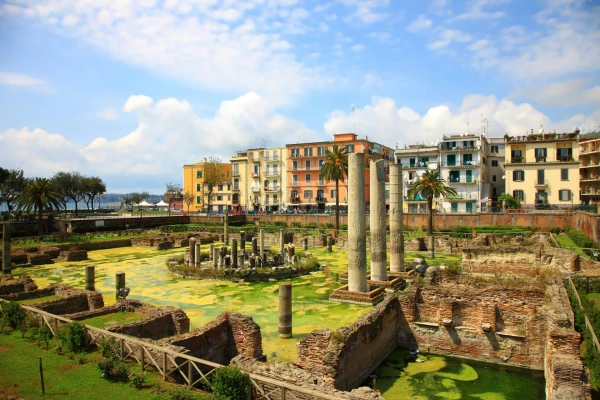
A second line, the Cumana, runs west to Pozzuoli, a port city of 75,000 living within one of the world's most active calderas. The Phlegraean Fields rumble daily, overshadowed by Vesuvius's lore. At Pozzuoli, the Macellum, a 2nd-century Roman market, shows evidence of bradyseism—the land's rise and fall due to subterranean magma movements. Holes bored by molluscs mark where columns once stood underwater. Rosi's camera descends into the submerged ruins of nearby Baia, where marble statues stand on the seabed among fish.
Between these lines lies Naples itself, known to the ancients as Neapolis. At the Museo Archeologico Nazionale, Rosi films archaeologist Maria in the storage vaults—the casaforte (safe of memory)—shelved with fragmented marble torsos, legs, and busts. These artefacts wait their turn to return to the museum floor, mirroring societal hierarchies. Rosi contrasts these with ex-voto offerings: small metal body parts left in churches for prayers. At Santa Maria Francesca delle Cinque Piaghe, hundreds of pregnancy-shaped ex-votos line the walls, reflecting Naples' sacred-profane blend.
Rosi's film ends in an abandoned cinema along the train line, where he projects Roberto Rossellini's Journey to Italy—a film about the past playing in a ruin, in a city built on ruins. Like a Chronovisor, the cinema makes the present tense become the past as you watch. Just like Naples. Just like Below the Clouds.