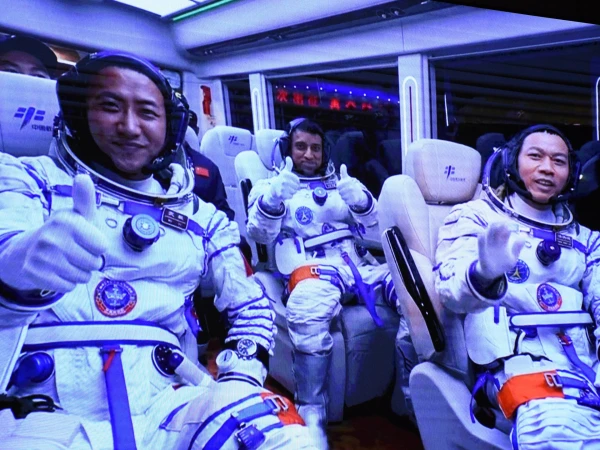
In a moment of poetic unity, Pakistan’s first astronaut, Dr. Namira Salim, brought the verses of celebrated Urdu poet Allama Muhammad Iqbal to the cosmos aboard China’s Tiangong space station. The recitation marked the third time Iqbal’s words have echoed beyond Earth’s atmosphere, bridging the cultural divide between India and Pakistan through the shared legacy of his literature.
Salim, who made history as Pakistan’s inaugural space traveler in 2006, performed the tribute during her recent mission, a gesture that transcended geopolitical boundaries. "Iqbal’s poetry is a bridge between hearts and minds," Salim said in a recorded message from orbit. "His words remind us that our shared heritage is as vast as the universe itself."
The recitation follows two earlier space-based tributes to Iqbal—one by Indian astronaut Rakesh Sharma in 1984 and another by a private astronaut during a 2023 commercial spaceflight. Sharma, who became the first Indian in space, famously quoted Iqbal during his mission, cementing the poet’s place in the annals of space exploration.
Iqbal, often referred to as the "Poet of the East," is revered in both India and Pakistan for his philosophical works that explore themes of self-realization, spirituality, and the struggle for independence. His verses, written in Urdu and Persian, continue to inspire generations across the subcontinent.
Salim’s mission, part of China’s growing space diplomacy, underscores the potential for cultural exchange even in the most distant of human endeavors. As she floated in microgravity, her recitation served as a poignant reminder of the power of art to unite nations, regardless of their terrestrial conflicts.