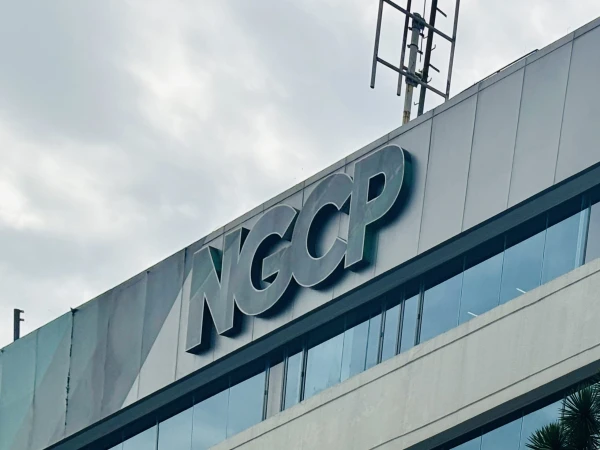
MANILA — The National Grid Corporation of the Philippines (NGCP) has moved to calm public concerns, stating that the ongoing conflict in the Middle East will not lead to increased electricity transmission charges for Filipino consumers.
In a media briefing on Wednesday, NGCP spokesperson Cynthia Alabanza clarified the corporation's regulatory framework, explaining that transmission rates are insulated from global fuel price fluctuations.
"NGCP is revenue-capped. Our annual revenue is predetermined by the Energy Regulatory Commission (ERC)," Alabanza told reporters. "Because our transmission wheeling services are not fuel-dependent, the Middle Eastern conflict will have no impact—positive or negative—on transmission rates."
While transmission charges remain stable relative to the geopolitical situation, consumers may notice a separate increase in their April power bills. This is attributed to higher ancillary service (AS) rates, which are pass-through costs for backup power used during supply-demand imbalances.
Data shows the overall transmission rate rose by 4.26 percent in March to P1.7526 per kilowatt-hour (kWh), up from February's P1.6810 per kWh. The AS rate component increased to P0.8516 per kWh from P0.8275 per kWh the previous month.
NGCP emphasized that it does not profit from these ancillary charges.
"As the system operator, NGCP's priority is grid resilience during imbalances," the corporation stated. "AS charges are remitted directly to the providers who help maintain the continuous flow of electricity nationwide."
The transmission wheeling rate—the cost for delivering power through the national grid—also saw a modest increase, moving to P0.7022 per kWh from P0.6677 per kWh.