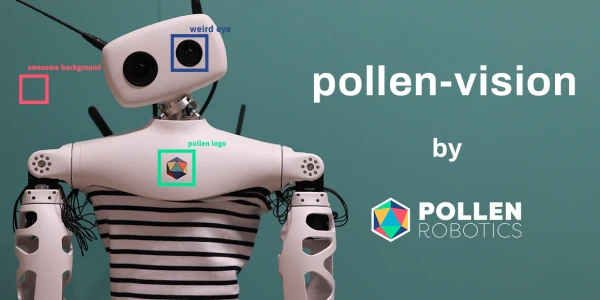
Researchers have introduced Pollen-Vision, a unified interface that streamlines the use of zero-shot vision models in robotics. This system allows robots to leverage pretrained vision models—such as CLIP, DINOv2, and others—without requiring task-specific fine-tuning, making it easier to apply cutting-edge computer vision in real-world robotic applications.
Zero-shot vision models can understand and recognize objects, scenes, and actions they have never been explicitly trained on, which is particularly valuable in dynamic environments where predefined categories are insufficient. However, integrating these diverse models into a single robotic system often involves complex, model-specific code. Pollen-Vision addresses this by providing a common framework that abstracts away the differences between models, enabling developers to swap or combine them seamlessly.
"Pollen-Vision acts as a plug-and-play interface, significantly reducing the engineering effort needed to incorporate state-of-the-art vision capabilities into robots," said a lead researcher.
The system supports multiple tasks, including object detection, segmentation, and visual question answering, all through a unified API. Early tests show that robots using Pollen-Vision can adapt to novel tasks with minimal human intervention, potentially accelerating deployment in fields like warehouse automation, home assistance, and exploration.
By simplifying the integration of zero-shot models, Pollen-Vision could make advanced vision more accessible to the robotics community, paving the way for more versatile and intelligent robots.