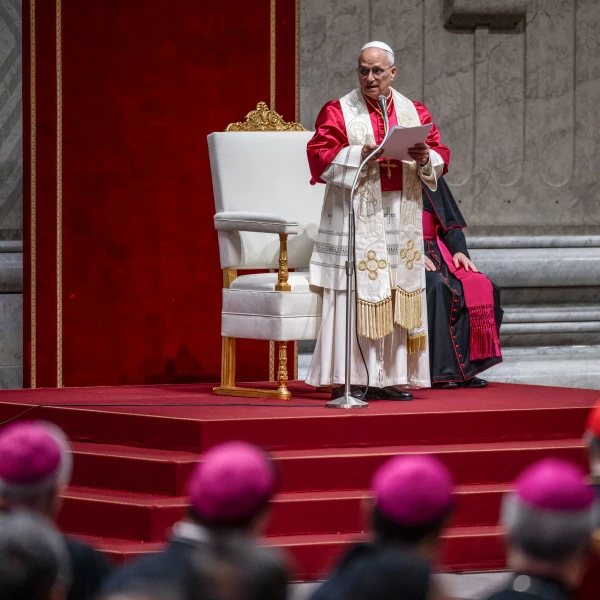
In a world where geopolitical leaders often temper their criticism of powerful nations, one voice stands uniquely unburdened by diplomatic calculations: Pope Leo XIV. As the spiritual leader of over a billion Catholics, the pontiff has positioned himself as the globe's most prominent moral challenger to President Trump's foreign policy, particularly regarding the ongoing conflict in Iran.
Unlike heads of state who must weigh economic sanctions, military alliances, or territorial disputes, Pope Leo operates from a position of spiritual authority that transcends conventional political leverage. This freedom has allowed him to deliver increasingly forceful condemnations of what he views as unjust warfare.
"God does not listen to the prayers of those who wage war," the pope declared during a Palm Sunday address, responding pointedly to Defense Secretary Pete Hegseth's recent call for Americans to pray for victory "in the name of Jesus Christ." This theological rebuke represents just one facet of Leo's broader critique of Trumpism, which he contrasts with his own advocacy for multilateralism, human dignity, and the rule of law.
The confrontation escalated when three American cardinals close to Pope Leo reinforced his position during a televised interview, prompting President Trump to unleash a social media tirade labeling the pontiff "Weak on Crime, Weak on Nuclear Weapons" and accusing him of catering to the "Radical Left." Trump suggested the pope should focus less on being a "Politician."
Rather than retreating, American Catholic leaders rallied behind their spiritual head, creating an unprecedented public standoff between the Vatican and the White House. The pope's office declined requests for further comment as Leo embarked on a previously scheduled trip to Africa, but Vatican observers note this confrontation represents a deliberate strategic choice.
"This isn't just about one conflict or one president," explained a Vatican analyst who requested anonymity. "Pope Leo sees himself as articulating an alternative vision for global order—one based on cooperation rather than confrontation, dialogue rather than domination."
Even before his election nearly a year ago, then-Cardinal Giovanni Battista Re implicitly criticized the Trump administration's immigration policies. Since becoming pope, he has consistently emphasized themes of welcome and human dignity while warning against the dangers of nationalism and exclusion.
As tourists continued to visit St. Peter's Square during the diplomatic spat, some expressed support for the pontiff's stance. "I'm not happy with how the president is talking about religious leaders," said Marléne Williams, a 71-year-old non-Catholic tourist from Colorado. "There should be more respect."
The Vatican has not indicated whether Pope Leo plans to modify his travel schedule or address the controversy further upon returning from Africa. What remains clear is that the 267th successor to Saint Peter has established himself as perhaps the only world leader who can challenge American power without fear of conventional political consequences—a reality that continues to reshape the intersection of faith and geopolitics.