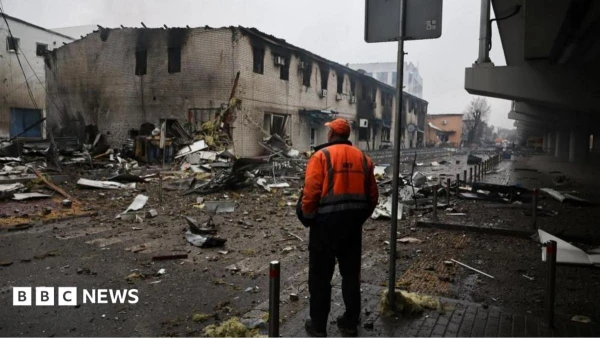
Russia launched a coordinated overnight assault on Ukraine, hitting three key bridges in the capital, railway stations, energy facilities and residential blocks. The barrage, which President Volodymyr Zelensky described as "one of the most massive strikes of the war so far," involved more than 110 ballistic missiles and over 400 attack drones, fired in rapid 20‑ to 30‑minute waves that hampered emergency response.
The targeted crossings – the Podilsko‑Voskresensky, Darnytskyi and Southern bridges – were sealed off to traffic. Kyiv mayor Vitali Klitschko urged residents to avoid private‑car travel unless absolutely necessary. At least nine people were confirmed dead, seven in Kyiv and two in Lviv, and roughly 28 others injured. The Sknyliv railway station in western Ukraine suffered heavy damage.
The strikes came just days after Ukrainian forces struck the strategically vital Crimean Bridge, a structure that links Russia to the annexed peninsula. Russian President Vladimir Putin had warned of a "far more painful" retaliation, a promise that appeared to be fulfilled with the Kyiv attacks.
Air‑raid sirens blared throughout the night and continued into the morning, as fires raged and debris littered streets. Energy plants and warehouses were also hit, adding to the disruption.
The offensive unfolded against a backdrop of diplomatic activity. European leaders gathered in Berlin for a "coalition of the willing" summit, discussing security guarantees for Ukraine. Meanwhile, Russian officials rebuffed U.S. proposals that Ukraine could receive NATO‑style guarantees, labeling such ideas "unacceptable."
Zelensky’s statement:
"The waves of missiles and drones were launched in 20‑ to 30‑minute intervals, making it more difficult to extinguish fires, clear debris, and restore services."
The incident underscores the escalating tit‑for‑tat pattern of strikes between Moscow and Kyiv, with civilian infrastructure increasingly caught in the crossfire.