The Premier League’s Key Match Incidents (KMI) Panel has become a lightning rod for controversy, not just among fans but within the ranks of the referees it evaluates. Every Wednesday at 10 a.m., the league publishes the panel’s verdicts on contentious decisions, a move that was once shrouded in secrecy but now faces growing scrutiny over its fairness and impact on officials’ livelihoods.
For referees, these evaluations are far from academic. The panel’s votes—cast by a rotating group of former players and coaches—determine a significant portion of an official’s annual salary. "It depends where you are on the list," explained Graham Scott, a former Premier League referee. "But if you're in the middle, then it might be 25% of your take-home. So it's substantial."
The panel’s influence extends beyond paychecks. Its assessments shape how referees approach games, often leaving officials baffled by shifting expectations. "Referees get confused on the back of that mixed feedback," Scott said. "It just shows how the system's flawed."
The Hidden Mechanics of Referee Pay
A Premier League referee’s salary averages £175,000 annually, with top officials like Michael Oliver earning up to £250,000. Half of this is a fixed base wage, while the other half hinges on performance metrics, including match fees and—critically—the KMI Panel’s evaluations.
Last season, Oliver topped the merit table with 93.5% of KMI decisions deemed correct. Yet even top officials face the panel’s unpredictability. Sam Barrott and Jarred Gillett were each penalized for four errors based on split votes of 2:3, while Stuart Attwell benefited from three contentious calls decided by 3:2 margins.
"The ones that sit in the margins can be very contentious and inconsistent," Scott noted. "You think, well, how can that be right? You know, that's not definitive, is it?"
A System Built on Subjectivity
The KMI Panel was introduced in 2022 after clubs grew frustrated with referees grading their own performance. Comprising five members—three former players, a Premier League representative, and a Pro Ref delegate—the panel’s identities remain secret. Each incident is assigned a difficulty rating, yet the process remains opaque.
Andy Davies, a retired Championship referee, called the system "ultimately lacking any real credibility amongst referees." The panel’s decisions, he argued, are often swayed by public opinion and political pressures, leaving officials in the dark about what constitutes a correct call.
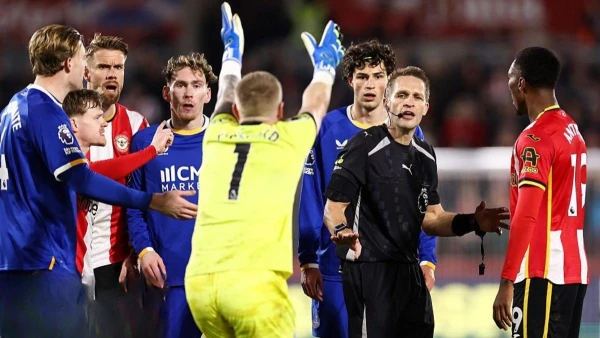
The inconsistency has real-world consequences. In December, the panel unanimously upheld a VAR decision to overturn a penalty for Brentford’s Dango Ouattara, ruling it correct. Yet last month, a nearly identical scenario involving Arsenal’s Kai Havertz was deemed incorrect by the same panel. "One minute we're told football expects an offside," Scott said. "Okay, we'll deliver that for you. We do it again, and they say the opposite."
Calls for Reform Grow Louder
Referees and analysts alike argue the game must overhaul the KMI process. "The game can afford to invest more in this process, and a properly independent approach," Scott urged. For now, officials have little recourse but to accept the panel’s verdicts, which directly impact their earnings and reputations.
As the Premier League grapples with the fallout, one thing is clear: the KMI Panel’s role is no longer just about correcting errors—it’s about defining them, and in doing so, reshaping the future of refereeing in English football.