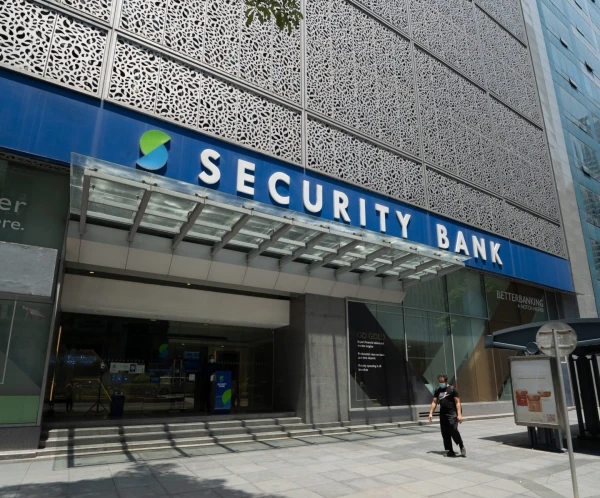
MANILA — Security Bank Corp. has announced an ambitious plan to slash its operational carbon emissions by 62% by 2035, marking a significant step in its sustainability journey. The commitment, unveiled in alignment with Earth Day 2026, focuses on Scope 1 and Scope 2 emissions—those directly linked to fuel and electricity consumption across its offices and branches nationwide.
Under the leadership of tycoon Frederick Dy, the bank will measure progress using an emissions intensity metric, calculated as tons of carbon dioxide equivalent per full-time employee. This approach aims to balance business growth with enhanced operational efficiency and a reduced environmental footprint.
While financial institutions often see the bulk of emissions from their financed portfolios, Security Bank is adopting a phased strategy, beginning with emissions under its direct control. "Climate action has to show up in how we operate day to day," said Allen Reyes, chief financial officer and chair of the bank’s sustainability committee. "This is about disciplined execution and exploring innovations that will reduce emissions while maintaining strong returns. Our actions today support a resilient and sustainable future."
Since 2023, the bank has collaborated with climate consultancy South Pole to establish a baseline aligned with global standards and assess feasible reduction pathways. To achieve its target, Security Bank will ramp up efforts in energy efficiency, renewable energy adoption, and sustainable workplace practices, alongside strengthening data systems and governance frameworks.
Shruti Singh, South Pole’s regional director, emphasized that credible climate action starts with clear baselines and achievable goals, highlighting the partnership’s role in driving measurable progress. This move reflects a broader industry shift as climate expectations intensify, with Security Bank positioning itself to tackle controllable emissions first while laying the groundwork for broader decarbonization initiatives.