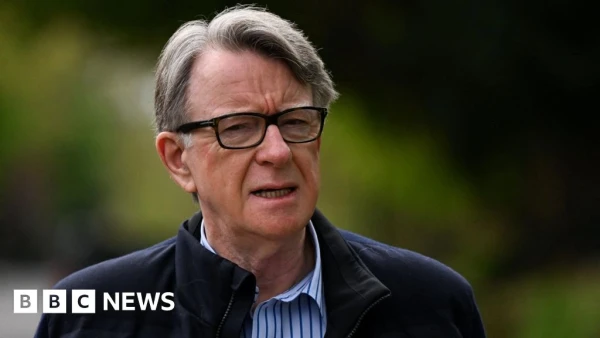
Prime Minister Sir Keir Starmer would have blocked Lord Mandelson's appointment as US ambassador had he been aware of security vetting failures, according to government ministers. The revelation has sparked political turmoil, with opposition parties demanding Starmer's resignation over what they call misleading statements to Parliament.
Technology Secretary Liz Kendall defended the Prime Minister on BBC's Sunday with Laura Kuenssberg, stating: "If he had known that UK security vetting hadn't cleared him, he would not have made that appointment." Starmer is scheduled to face questioning from MPs on Monday regarding the controversial appointment.
Deputy Prime Minister David Lammy echoed this defense, telling The Guardian he had "absolutely no doubt at all" that Starmer "would never, ever have appointed" Mandelson with knowledge of the vetting failure. Lammy, who served as foreign secretary during the appointment process, revealed that neither he nor his advisers were informed about the security concerns.
The controversy has already claimed one high-profile casualty: Sir Olly Robbins, the Foreign Office's most senior civil servant, was ousted this week over the vetting dispute. Lammy expressed surprise at Robbins' departure, noting the civil servant had only been in his position for weeks when the vetting report surfaced and that there were "time pressures" to have Mandelson in place following Donald Trump's return to the White House.
Current Foreign Secretary Yvette Cooper confirmed Mandelson's vetting received "priority clearance" but insisted full security checks were conducted despite the accelerated timeline.
Opposition leaders have seized on the controversy. Conservative shadow Cabinet Office minister Alex Burqhart placed responsibility squarely on Starmer, while Reform's Treasury spokesperson Robert Jenrick questioned whether the Prime Minister was "a liar or just grossly incompetent." Liberal Democrat leader Sir Ed Davey accused Starmer of "catastrophic misjudgment" on multiple levels.
Former senior civil servant Helen MacNamara criticized the government's response, suggesting officials might have believed the risks associated with Mandelson were "priced in" and that they were simply doing "what the prime minister wanted" while implementing security mitigations.
Dame Emily Thornberry, chair of the Foreign Affairs Committee, noted that new information has "called into question" evidence Robbins provided to MPs in November, when he failed to disclose that the government's security vetting agency had advised against granting Mandelson high-level clearance.
Robbins is expected to face the Foreign Affairs Committee again on Tuesday, with allies explaining his previous silence resulted from confidentiality requirements surrounding the intrusive vetting process. Starmer himself has called it "staggering" that he wasn't informed sooner about the vetting failure, which only began after Mandelson's selection as Washington representative.