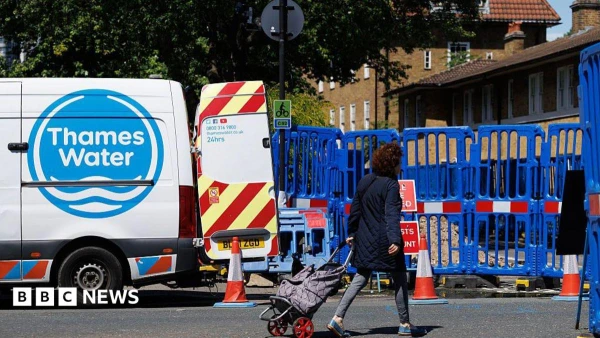
Thames Water is emerging as a defining challenge for incoming Prime Minister Andy Burnham, as his pledge to bring key utilities under "public control" faces its first real-world test.
Despite reporting a post-tax profit of £113 million for the year to March—a sharp turnaround from a £1.51 billion loss the previous year—the company remains deeply troubled. Its net debt has ballooned to £18.5 billion, up from £16.8 billion, and cash reserves are sufficient only until the end of this year. The firm has warned it has enough debt funding to continue operations only until the end of 2026.
Customer bills have risen 40%, but that revenue is still far from enough to fund the massive infrastructure upgrades needed after years of underinvestment. Pollution incidents fell 18%, but the company hit just over half of its performance targets. Customer complaints soared 77% to 122,798, with bill complaints doubling.
Several options are on the table. The first is a rescue deal from lenders, which would write off some debt and inject new cash in exchange for leniency on environmental targets. Environment Secretary Emma Reynolds rejected this plan as "weak" and insufficient for consumer and environmental protection.
Another option is "special administration," where government-appointed officials run the company temporarily. This would leave the government responsible for existing debts and require billions in public investment, though the business could later be sold back to private investors.
Burnham, who has previously called for Thames Water to be nationalised, faces a dilemma. Handing the company back to private owners would contradict his push for greater public control, but permanent nationalisation would be costly for taxpayers—especially those outside London. Thames Water chief executive Chris Weston said lenders are waiting to see the new government's stance before committing more funding.
The company also faces criticism over executive pay. Weston's salary rose by £128,000 to £1.163 million, and bonuses to other directors increased to £4.1 million from £2.8 million. Reynolds called the payouts "outrageous," noting that the government has banned bonuses for polluting water bosses.
Dr Heather Smith, a senior lecturer in water governance at Cranfield University, said special administration is a "possible outcome" but cautioned it differs from full nationalisation. "Long-term nationalisation would be a struggle because infrastructure upgrade costs are such that it would be a real struggle for the public purse to handle," she said.
How Burnham navigates this fast-approaching problem will offer an early glimpse of what his political approach—sometimes dubbed "Burnhamism"—will mean in practice.