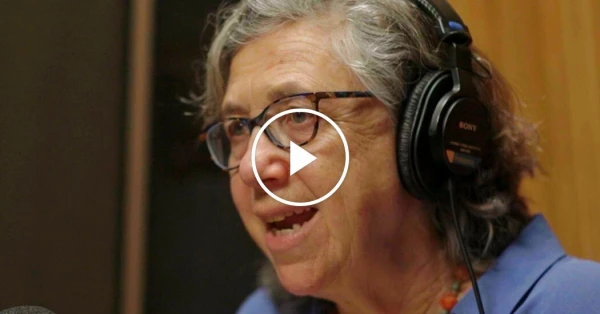
As millions of Americans filed their annual tax returns this April, a stark reality emerged from recent investigations: the country's wealthiest individuals often pay a fraction of what middle-class workers contribute to federal coffers. Tax expert Ray Madoff, a professor at Boston College Law School, explains how the current system allows billionaires like Jeff Bezos to legally minimize their tax burden while ordinary wage earners shoulder a disproportionate share.
"When people take a salary, they are subject to high income taxes and payroll taxes," Madoff explains. "Jeff Bezos and many other multi-billionaires have no interest in paying those taxes."
Recent revelations from leaked tax documents show startling figures: Warren Buffett paid an effective tax rate of just 0.1%, Jeff Bezos 0.98%, and Michael Bloomberg 1.3%. These numbers contrast sharply with the typical American worker, who faces income tax rates up to 37% plus payroll taxes reaching 15.3%.
The core issue lies in how different types of income are treated under current tax law. While most Americans earn wages subject to immediate taxation, the ultra-wealthy primarily benefit from appreciating assets like stock holdings. Bezos, for example, has maintained an annual salary of just $82,000 for over two decades while his Amazon stock has grown exponentially in value—all without triggering taxable events.
"That massive growth of stock happens entirely tax free with no time frame under our current system," Madoff notes. "We only impose a tax if the stock is sold, and Bezos never has to sell because he can simply borrow against the stock."
This borrowing strategy creates what experts call the "buy, borrow, die" approach: billionaires purchase appreciating assets, borrow against them for living expenses, and pass the assets to heirs with stepped-up basis, potentially avoiding taxation entirely across generations.
The common narrative that America's tax system heavily burdens the wealthy often focuses on misleading statistics, according to Madoff. While the top 1% of income earners (including high-salaried professionals) do pay significant taxes, the wealthiest Americans—those whose fortunes come from asset appreciation rather than salaries—often fall into the category of non-payers.
"The problem with that statistic is it's misleading on both ends," Madoff says of claims that the wealthy shoulder most of the tax burden. "When it comes to the wealthiest Americans—the Zuckerbergs, Bezoses, Musks—they are just as likely to be in the 40% of non-payers as they are in the top 1% of payers."
Madoff, author of "The Second Estate: How the Tax Code Made an American Aristocracy," argues that this system creates structural inequality. While payroll taxes hit ordinary workers from their first dollar earned, billionaires can access immense wealth through tax-advantaged mechanisms unavailable to most Americans.
The expert suggests several potential reforms, including addressing the stepped-up basis loophole and creating mechanisms to tax unrealized gains for the ultra-wealthy. As debates about tax fairness continue, the fundamental question remains: should a system that allows billionaires to pay lower effective rates than teachers, nurses, and factory workers be considered functional or fundamentally broken?