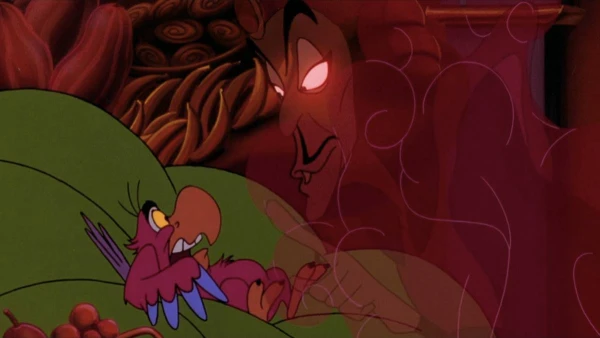
For decades, Disney’s direct-to-video sequels have been dismissed as cash grabs—cheap knockoffs that tarnished the magic of the originals. But one film from this maligned era stands apart, not just for its profitability, but for its unexpected depth and charm. The Return of Jafar, the 1994 sequel to Aladdin, was the first of Disney’s infamous direct-to-VHS releases, and while critics panned it for its rushed animation and lackluster storytelling, it quietly carved out a niche of its own. Nearly 30 years later, it’s time to reconsider this polarizing parrot’s story.
Released just 18 months after the original Aladdin, The Return of Jafar was a product of Disney’s television animation division, a stark contrast to the meticulous craftsmanship of its theatrical predecessor. Produced on a shoestring budget of $5 million, the film grossed over $300 million—a staggering return that silenced skeptics, including Pixar’s John Lasseter, who later convinced Disney to shut down the direct-to-video division after the acquisition of Pixar in 2006. Former Disney CEO Bob Chapek, who oversaw the division during its heyday, defended the sequels in his 2025 memoir, Jafar Returns, and I Emerge, arguing that their success was a testament to their accessibility and appeal to a younger audience. "It was Bob from Flyover Indiana, educated at a state school, who disrupted the business and kept the studio afloat with an endeavor others had dismissed as creative heresy," Chapek wrote.
Critics at the time, however, were less forgiving. The animation was noticeably rougher, the pacing uneven, and the Genie—a cornerstone of Aladdin’s charm—was recast with Dan Castellaneta, best known as the voice of Homer Simpson. Yet, for many who grew up with the film, The Return of Jafar wasn’t just a sequel—it was a character study of Iago, the sarcastic, scheming parrot who stole the show.
Iago, once Jafar’s loyal (if reluctant) sidekick, undergoes a transformation in the sequel. Disgusted by life inside a lamp and tired of Jafar’s domineering ways, he abandons his master and hatches a plan to ingratiate himself with Aladdin and Jasmine. His motives are purely self-serving at first—he wants a life of luxury in the palace—but as the story unfolds, Iago’s cynicism softens. By the end, he finds himself genuinely caring for the humans he once despised, particularly Aladdin, who offers him a second chance. It’s a rare moment of redemption in a film often dismissed as disposable.
The real star of The Return of Jafar, however, was Gilbert Gottfried, the legendary comedian whose voice defined Iago. Gottfried’s signature screeching delivery brought the parrot to life in ways the original film couldn’t have imagined. In The Return of Jafar, Gottfried wasn’t just a cameo—he was the lead, and his performance elevated the material beyond its budget constraints. "I’m Lookin’ Out for Me," one of the film’s two songs, became an unexpected highlight, blending Gottfried’s trademark humor with a catchy melody that still resonates today.
Gottfried’s legacy looms large over the film’s modern reputation. After his death in 2022, fans revisited his filmography, and The Return of Jafar emerged as a standout in his career—a rare leading role in a project that, despite its flaws, showcased his comedic genius. For those who grew up with the film, it’s more than just a nostalgic relic; it’s a tribute to a performer who brought joy to millions, even in the most unlikely places.
So why does The Return of Jafar matter? Because it’s a reminder that even in the most cynical corners of entertainment, there’s room for unexpected depth and heart. It’s not a masterpiece, but it’s not the disaster its detractors claim. For those who love Aladdin, it’s a chance to revisit a world they adored as children. For fans of Gilbert Gottfried, it’s a celebration of a career that defied expectations. And for Disney, it’s a testament to the power of second chances—even for the most maligned sequels.
Next time you think of Aladdin, don’t skip the sequel. Give Iago his due.