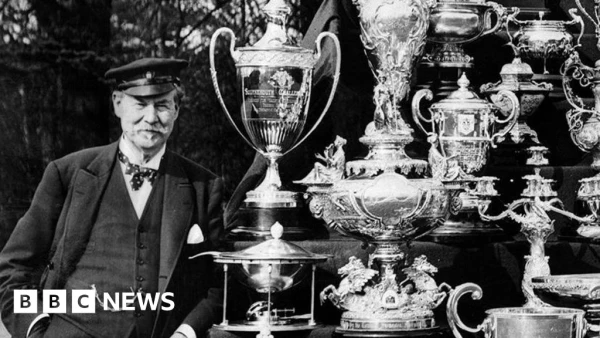
The theft of an 18-carat gold trophy from Glasgow's Riverside Museum has captured headlines, but the Lipton Cup's story is far more remarkable than its recent disappearance.
In December 1930, after Sir Thomas Lipton's fifth and final failed attempt to win the America's Cup, he received a one-of-a-kind honor. It wasn't the silver trophy he had pursued for three decades, but a heartfelt tribute from the American public who called him the "world's most cheerful loser."
Lipton's rise from humble beginnings in Glasgow's Gorbals to a tea tycoon and sporting icon is the stuff of legend. Born to Irish immigrants, he worked as a boy pushing a wheelbarrow to restock his father's shop. At 15, he sailed to America with just a few pounds, where a job in a New York department store inspired his retail vision. Returning to Glasgow in 1871, he built a grocery empire and later revolutionized the tea market by purchasing Sri Lankan plantations.
His passion for yachting led to five America's Cup challenges between 1899 and 1930. Though he lost every time, his grace and charm made him a hero on both sides of the Atlantic. His yachts, all named Shamrock, pushed design boundaries—Shamrock V featured a hollow spruce mast—but American rivals always stayed ahead, using aeronautical technology for lighter masts.
After his final defeat, 82-year-old Lipton smiled as the American crew celebrated. His supporters, led by humorist Will Rogers and New York's mayor, raised funds for a consolation trophy. Thousands donated, including future President Franklin D. Roosevelt and Utah miners who contributed 25 kg of silver for the base. The cup itself was solid gold, adorned with shamrocks and inscribed "To the Gamest Loser in the World of Sport."
Presented at New York City Hall during the Great Depression, the trophy moved Lipton to tears. He died a year later, leaving his fortune to Glasgow's poor and his sporting trophies to the city.
Today, the Lipton Cup's whereabouts are unknown. Its monetary value is £490,000, but its symbolic worth—representing sportsmanship over victory—is immeasurable.