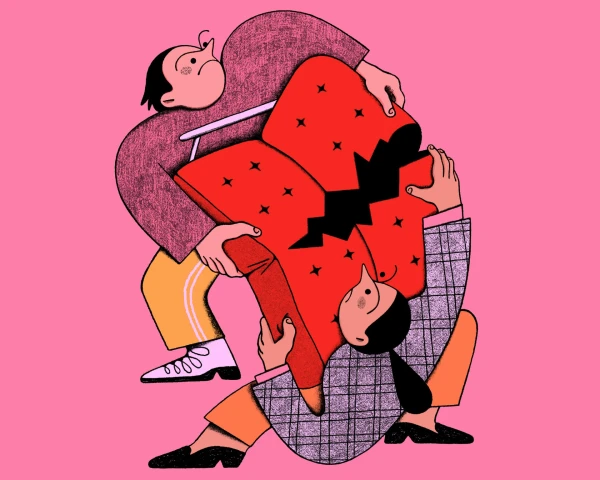
When wandering around Ikea arm-in-arm, most newly cohabiting couples are too excited about their new sofa, or Billy bookcase, or the enormous house plant they are about to wrestle into an Uber, to think too deeply about what might happen to those items were their relationship to sour. But at a time when many young couples can’t afford to buy property or have children, furniture can end up being the only thing to fight over at the end of a relationship. And, as the cost of living rises, having to replace furniture after a breakup can have a huge impact on people’s finances.
Becca, a 35-year-old from Leeds, learned this the hard way. After moving in with her then-girlfriend, she sold or left behind all her furniture to appease her partner, who saw her offer to store items as a sign of disloyalty. When the relationship ended six months later, Becca lost around £3,000. "It took me a couple of years to recover financially," she says. She regrets especially a glass-door cabinet her mother gave her as a graduation gift, which she sold for a third of its value.
"Furniture is rarely just about the object itself," says couples and family therapist Kalanit Ben-Ari. "People often project other feelings on to furniture. It can reflect power dynamics, resistance to letting go, resentment, or even revenge." She advises clients, "If something costs you your peace of mind, it is too expensive. Let go, and put your energy into moving forward."
But 'letting go' is easier for some than others. A 2024 poll of 3,000 people found that one in five UK adults aged 18-40 have delayed a breakup to make the cost of living more affordable.
Emily, 30, of London, split up with her boyfriend three years ago. She had brought most of the furniture into the relationship, but after the breakup, her ex wanted to keep several items, including a large rug from her aunt. Emily agreed, but now faces an awkward conversation with her aunt—and a lingering need to ask for the rug back.
Similarly, Matt, 45, lost a living room table and vases after his ex moved out. He decided not to fight for them, reasoning, "The new chapter is so much more important." Jade, 32, left behind a bed, fridge, and washing machine that she had paid half for, because she didn't want the conflict. "Why didn't I just take that?" she now wonders.
For couples not married, there are few legal guidelines for dividing furniture. The emotional cost often outweighs the financial, but as one expert notes, "Furniture fights are never really about the furniture."