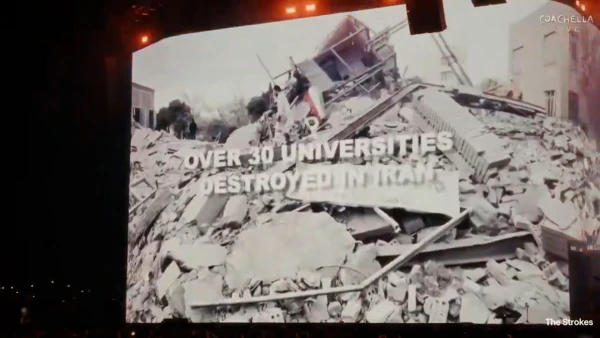
In a powerful statement during their Coachella performance, American rock band The Strokes drew attention to the widespread destruction of universities in Gaza and Iran, attributing the devastation to US-Israeli military actions.
During their set at the renowned music festival, the band incorporated visual elements and commentary highlighting how educational institutions in these regions have been severely damaged or destroyed in recent conflicts. This artistic choice transformed their performance into both entertainment and political commentary, reaching thousands of festival attendees with a message about the impact of warfare on academic infrastructure.
"When we perform, we want to use our platform to shed light on important issues that might not get mainstream attention," the band's frontman reportedly told the audience between songs. "The destruction of universities represents more than just buildings—it's the silencing of education, research, and future generations."
The visual presentation reportedly included images of damaged university campuses alongside statistics about educational disruption in conflict zones. While Coachella is primarily known for its musical performances and celebrity appearances, The Strokes' set demonstrated how artists are increasingly using major cultural events to address geopolitical issues.
This isn't the first time musicians have incorporated political messages into festival performances, but the specific focus on academic infrastructure destruction represents a growing trend of artists highlighting less visible consequences of international conflicts. The response from the Coachella crowd appeared mixed, with some attendees cheering the statement while others seemed more focused on the musical performance itself.
The band's decision to address this issue at one of America's most prominent music festivals ensures the message reaches beyond typical political circles to a broader, younger audience that might not regularly engage with international news about educational impacts in conflict zones.