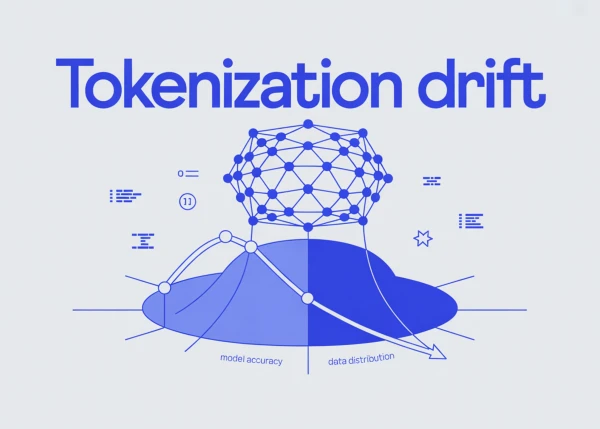
Tokenization drift is a phenomenon in which the way a language model processes and represents tokens shifts over time or across different contexts, leading to inconsistencies in output. This often occurs in large language models (LLMs) when they encounter new terms, misspellings, or domain-specific language that deviate from their training data. As models are updated or fine-tuned, the tokenization boundaries can change, causing errors in tasks like translation, summarization, or code generation.
To fix tokenization drift, developers can employ several strategies:
- Use consistent tokenization rules across training, fine-tuning, and inference phases.
- Regularly retrain tokenizers on updated corpora to include emerging vocabulary.
- Implement subword regularization techniques to make models robust to slight tokenization variations.
- Monitor tokenization behavior with logging and alerting systems to detect drift early.
Addressing tokenization drift is crucial for maintaining the reliability and accuracy of AI systems, especially in production environments where consistency matters.