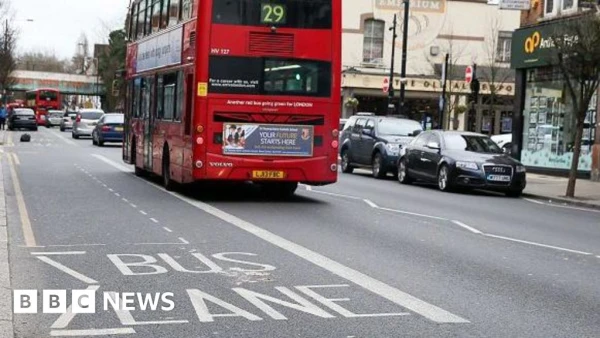
The Conservative Party has announced plans to eliminate 24-hour bus lanes in areas under their control, following the upcoming local elections in England this May. The proposal, dubbed "bus lanes that make sense," forms part of a broader six-point strategy aimed at easing restrictions on drivers.
Under the policy, Conservative-run councils would only enforce bus lanes where a "genuine requirement" is demonstrated. Additionally, if the party returns to national government, it intends to ban 24/7 bus lanes outright unless a minister grants specific written permission.
"Councils nationwide have turned bus lanes into 24/7 enforcement traps," a Conservative spokesperson said. "We will restore a common-sense approach to road space usage."
Bus lanes, typically reserved for public buses and authorized vehicles like taxis, are managed by local authorities. Their operating hours vary, with some active only during peak times and others operating around the clock. The prevalence of 24-hour bus lanes differs across the UK.
In 2021, Transport for London made permanent a trial of around 50 miles (85 km) of 24/7 bus lanes, citing improved bus journey times. Meanwhile, West Northamptonshire Council, then under Conservative control, scrapped a 24/7 bus lane in favor of reduced operating hours. However, Conservative-run Norfolk County Council introduced a 24/7 bus lane the same year.
The pledge is part of a wider Conservative package to "restore common sense for car owners to get Britain moving again." Other measures include reversing a planned fuel duty hike in September, investing £100 million in pothole repairs, ending blanket 20 mph speed zones, clearing driving test backlogs, and scrapping the 2030 ban on new petrol and diesel cars.
Labour criticized the Conservatives, pointing to the state of roads and driving test system after 14 years of Tory governance. The party highlighted its own record of freezing fuel duty, doubling pothole repair funding, approving new road projects, and increasing driving test capacity.
The Liberal Democrats attributed rising fuel costs to "Trump's illegal war in Iran" and called for an immediate 10p fuel duty cut and reduced VAT on public electric vehicle charging. Reform UK accused Conservative leader Kemi Badenoch of copying their policies, including the fuel duty reversal. The Green Party dismissed the plan as "Jeremy Clarkson's wildest dream" and warned it would be detrimental to communities.
"If recent events have taught us anything," a Green spokesperson added, "it's that we must stop compelling people to rely on cars for daily life."