People in the UK could face elevated costs for energy, food, and flight tickets for at least eight months following the conclusion of the US-Israel war with Iran, according to a senior minister.
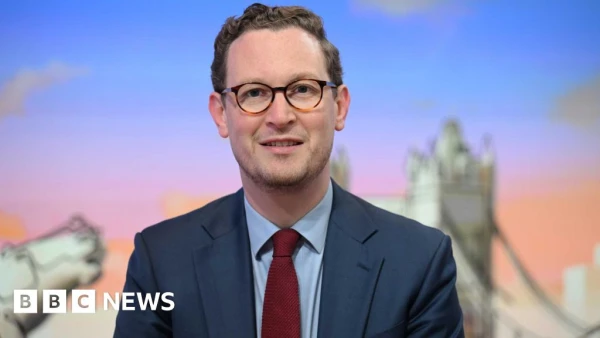
Darren Jones, Chief Secretary to the Prime Minister, told the BBC that the government is "looking at all of those things" as it ramps up preparations to mitigate potential shortages of food and fuel caused by the conflict.
The disruption to energy production and transportation across the Middle East has brought supply chains to a near standstill, triggering global price spikes.
Earlier this month, government officials outlined a worst-case scenario of food shortages by summer, including chicken and pork, if the war persists.
The government has also urged the public to continue using petrol and cars as usual and not to alter travel plans, amid concerns over potential jet fuel shortages.
Speaking on the BBC's Sunday with Laura Kuenssberg, Jones said he is examining the economic impact of the war "in a lot of detail," but emphasized that "price pressure" is more likely than empty supermarket shelves.
"Our best guess is eight plus months from the point of resolution that you'll see economic impacts coming through the system," he said. "So people will see higher energy prices, food prices [...] flight ticket prices as a consequence of what Donald Trump has done in the Middle East."
Prime Minister Sir Keir Starmer will chair another meeting of a Cabinet committee on Tuesday, established to address any shortfalls. A group of ministers is meeting twice weekly to monitor stock levels and supply chain disruptions.
Twice-weekly meetings of the contingency planning group are led by Jones, who previously stated: "This is not our war. The government made the right call to stay out of the conflict and only take defensive action to protect Britain's interests. We're acting now to prepare for, and mitigate where possible, the impact on our economy and domestic security as a result of the conflict."
Last week, the International Monetary Fund predicted that the energy shock from the war would hit the UK hardest among advanced economies, slashing its growth estimate for this year to 0.8% from a previous 1.3%.
Jones has said that while the government will do everything in its power to find a permanent solution and offset the impact, "what happens abroad will still affect us here at home."
A government source previously told the BBC it was planning for a scenario involving breakdowns in carbon dioxide (CO2) supply, which is used in animal slaughter and food preservation, should the Strait of Hormuz remain closed.
The government has provided funding to reactivate the Ensus bioethanol plant, which produces CO2 as a by-product, to shore up supplies. A spokesperson for the plant expressed confidence in continuing to meet the country's CO2 needs for the foreseeable future.
Jones told the BBC on Sunday he had raised concerns about UK pubs potentially running out of draught beer during the Men's Football World Cup in the summer due to CO2 shortages. "We are doing everything we can to make sure that is not the case," he said.
Most of the UK's CO2 is imported from Europe, often produced as a by-product of fertilizer manufacturing, which requires natural gas.
Supermarkets have said they are working with the government to plan for a worst-case scenario. Last month, the National Farmers' Union warned that cucumber and tomato prices could rise over the next six weeks, with other crops and milk becoming more expensive in three to six months.
UK airlines have insisted they are "not currently seeing a shortage of jet fuel" as they purchase supplies in advance and airports maintain stocks.
The Liberal Democrats have urged the government to include a bill in the next King's Speech prioritizing food security. The party's Cabinet Office spokeswoman, Lisa Smart, said "the government also needs to wake up and provide more support to people who simply cannot afford the sky-high cost of getting around." She proposed a 10p cut in fuel duty and reduced public transport costs.
Iran's top negotiator said earlier this week that reopening the Strait of Hormuz was "impossible" if the US continues its naval blockade of Iranian ports. US President Donald Trump aims to pressure Iran by targeting tolls the country demanded from ships passing through the strait and Iran's oil revenue. Iran has labeled the blockade "piracy." Negotiators were in Islamabad, Pakistan, on Saturday for talks to end the conflict.