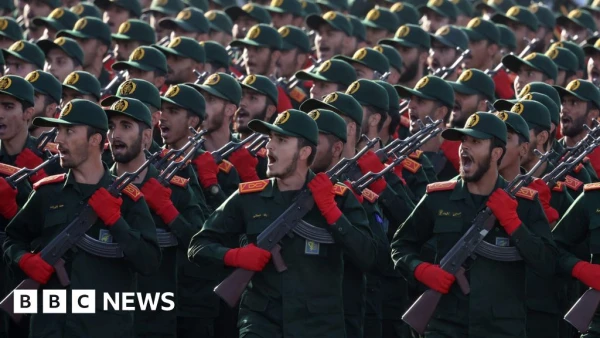
The UK government is set to introduce new anti-terror legislation that will allow it to proscribe state-backed organizations such as Iran's Islamic Revolutionary Guards Corps (IRGC), according to sources familiar with the plans.
The proposed powers, expected to be announced in the King's Speech on 13 May, would create new criminal offenses for supporting or promoting groups formally designated as state-supported threats. This marks a significant expansion of existing counter-terrorism measures.
Prime Minister Sir Keir Starmer has emphasized the need to address "malign state actors" and confirmed that legislation would be brought forward "as quickly as possible." In a video shared by the Jewish Chronicle, he expressed concern over the increasing use of proxies by the Iranian government, stating that "proxy attacks are a growing and real concern."
The IRGC, established to protect Iran's Islamic system, has grown into a major military, political, and economic force. Western nations have long accused it of sponsoring terrorism abroad. Labour MPs have been pressing for a ban following a series of antisemitic attacks since the conflict in Iran escalated. An Islamist group with suspected Iranian links claimed responsibility for an attack on Jewish community ambulances in north London.
While other European countries and the EU have already listed the IRGC as a terrorist organization, the previous Conservative government refrained from doing so, citing the need to maintain diplomatic relations with Iran. The independent reviewer of terrorist legislation, Jonathan Hall KC, recommended in a report that new powers be created to target state-sponsored organizations, which the government has accepted.
Home Secretary Yvette Cooper stated last year that the government would create "a new power of proscription to cover state threats – a power that is stronger than current national security act powers." Shadow foreign secretary Priti Patel criticized the Labour government for delays, saying, "Our allies from Europe to Canada and the Gulf have already acted, and the UK is lagging behind."
The new legislation aims to close gaps in existing laws and provide robust tools to counter state-backed threats operating within the UK.