As a sudden ceasefire between Israel and Lebanon took effect, sirens blared across northern Israeli communities, warning of incoming rockets from Lebanese territory. In Nahariya, air defense interceptors streaked into the night sky, triggering loud explosions as they neutralized threats. Ambulance crews reported at least three people wounded by shrapnel in the hours leading up to the truce, including two in serious condition.
On the ground, skepticism runs deep about why Israeli leadership agreed to halt military operations. "I feel like the government lied to us," said Gal, a student in Nahariya. "They promised this time would end differently, but we're once again heading toward a ceasefire that solves nothing."
Maor, a 32-year-old truck driver whose home was struck by a rocket last year, expressed frustration: "We gave the Lebanese government a chance and they failed to disarm Hezbollah. If we don't do it, no one will. It's a shame they stopped—there seemed to be significant achievements this time."
The announcement caught Israel by surprise, reportedly even within the government's own security cabinet. According to leaks from an emergency meeting, ministers were not given a vote on the ceasefire, with Prime Minister Benjamin Netanyahu convening the session on just five minutes' notice before the announcement.
"A ceasefire must come from a position of strength to serve Israel's national interests," said former IDF Chief of Staff Gadi Eisenkot. "A pattern has developed where ceasefires are imposed upon us—in Gaza, in Iran, and now in Lebanon. Netanyahu does not know how to convert military achievements into diplomatic gains."
While framing the agreement as "an opportunity to make a historic peace agreement with Lebanon," Netanyahu emphasized he made few concessions. He stated that Hezbollah's demands for Israeli withdrawal and a "quiet for quiet" principle were rejected, adding, "We are remaining in Lebanon in a thickened security zone. We are there, and we are not leaving."
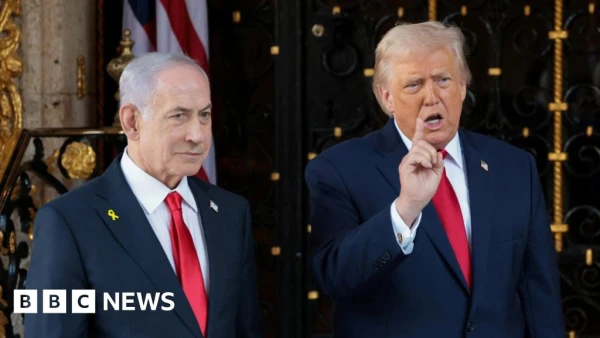
The timing appears linked to broader regional dynamics. Iran has been pushing for an end to Israeli operations against its proxy group Hezbollah since agreeing to a two-week ceasefire with the United States earlier this month. After initially describing the Lebanon conflict as "a separate skirmish," U.S. President Donald Trump acknowledged this week he was trying to create "a little breathing room between Israel and Lebanon" as negotiations with Iran faltered and the truce period neared its end.
Public opinion in Israel shows significant resistance to the ceasefire. A Channel 12 news poll found nearly 80% of respondents supported continued strikes on Hezbollah, while three separate surveys indicated majority opposition to the two-week ceasefire Trump negotiated with Iran.
"Agreements may be signed with a tie in Washington, but the price is paid in blood and destroyed homes in northern Israel," said Moshe Davidovich, head of the Mateh Asher Regional Council. "Residents of the north are not extras in an international public relations show."
The truce agreement explicitly preserves Israel's right to take "all necessary measures in self-defense" against planned or ongoing attacks—similar to provisions in the November 2024 ceasefire that allowed continued strikes against perceived threats.
Few Israelis view this temporary halt as a resolution to the conflict with Hezbollah. Instead, many see it as further evidence that their leadership is again yielding to Washington's pressures, highlighting the growing perception that U.S. and Israeli war objectives are not always aligned.