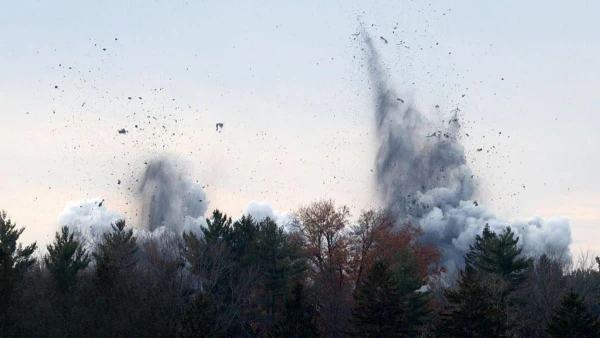
The US Army declared a controlled detonation of nearly five tonnes of toxic explosives in Iowa a "huge success" on Wednesday, as environmental monitors confirmed no airborne lead contamination in the aftermath.
The operation, which involved the detonation of lead azide—a volatile compound stored for two decades—sparked widespread public concern and legal challenges in the weeks leading up to the blast. Residents near the Middletown ammunition plant had braced for potential health risks, with some evacuating and others sheltering in place despite assurances from officials that the risk of an accidental explosion was far greater.
Smoke billowed into the sky shortly after 9:00 AM local time, but the explosion’s impact remained largely imperceptible to those nearby. Middletown Mayor Rodney Johnson, watching from eight miles away, reported feeling and seeing nothing unusual. "We did not feel anything. We did not see anything," he told reporters. Similarly, Sandy Mabeus, whose home was just one mile from the detonation site, confirmed through live streams that the blast had occurred without any noticeable disruption to her household.
Federal and state agencies moved swiftly to assess the aftermath. The Environmental Protection Agency (EPA) and the Federal Emergency Management Agency (FEMA) issued "all clear" statements, with EPA Administrator Lee Zeldin stating that air monitors detected "zero lead" in the atmosphere. The Army also confirmed that post-detonation surface sampling was underway, with results pending.
Iowa Governor-elect Rob Sand, however, urged caution, calling for "immediate transparency" and additional testing to address what he described as a "chaotic and unclear" lead-up to the event. "Any Iowans who have been impacted in any way must be taken care of fully, right away," Sand emphasized.
The Army had faced intense scrutiny over its handling of the operation, which was repeatedly delayed due to public outcry and legal battles. An appeals court ultimately overruled a halt on the detonation, citing the greater risk of an unplanned explosion. The volatile nature of the stored explosives—degraded over time through recrystallisation—had raised fears of accidental detonation from friction or movement.
While officials celebrated the operation’s success, environmental advocates and local leaders remained vigilant. Illinois Governor JB Pritzker, whose state borders Iowa, directed agencies to stay on standby for any unexpected impacts, though initial assessments showed "little to no effect" across the border.
For residents like Iowa farmer David Vandenberg, who lives 20 miles from the blast site, the relief was palpable. "I think the effects will be minimal," he said, though he acknowledged the prolonged uncertainty had taken a toll. "The waiting and wondering has not been a good thing for anybody in the area."
With the detonation complete, attention now turns to the long-term monitoring and cleanup efforts. The Army has pledged additional resources and testing in the coming days, as communities seek to move forward from weeks of anxiety.