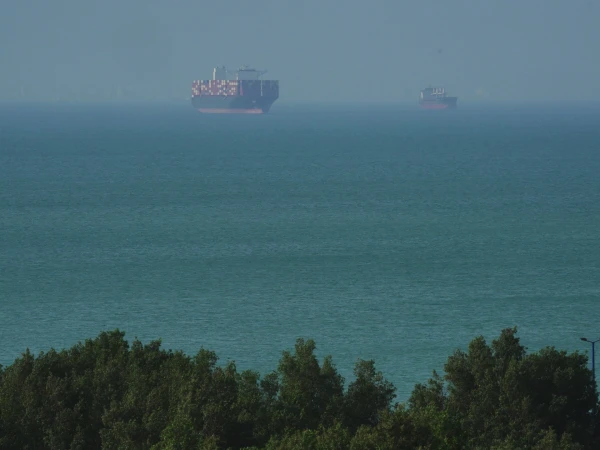
The United States military announced on Thursday that it has ended its naval blockade of Iranian ports, fulfilling a key provision of a temporary agreement between Washington and Tehran that suspends military operations during peace negotiations.
US Central Command (CENTCOM) confirmed in a statement that "all US blockade efforts have ceased," but emphasized that American naval forces will remain in the region to monitor compliance with the accord.
"Today, US forces lifted the blockade on all maritime traffic entering and exiting Iranian ports and coastal areas, in accordance with the President's direction. American forces are not impeding the transit of vessels to or from Iranian ports," CENTCOM said in a social media post.
The development follows a tense period during which the Strait of Hormuz—a vital chokepoint for global oil shipments—was effectively closed due to the US-Israel conflict with Iran. Traffic through the waterway came to a near standstill, disrupting energy markets and threatening the global economy.
Vice President JD Vance revealed during a White House briefing that 12.5 million barrels of oil passed through the Strait on Wednesday, with the US Navy allowing "north of a dozen ships" through the former blockade.
Iran's Supreme National Security Council responded by announcing that its Persian Gulf Strait Authority would expedite ship clearances and clear mines laid during the conflict. State TV reported that no fees would be charged during a 60-day negotiation period, though vessels must submit requests to a new government body for passage.
The fragile ceasefire, however, faces significant hurdles. Israel continues its occupation of southern Lebanon, Iran's nuclear program remains a contentious issue, and Tehran has signaled plans to impose usage fees for the Strait of Hormuz in the future.
Vance defended the agreement against domestic critics, stating: "I think that when people get to understand not just the agreement, but our negotiating posture as a country, they will realize this is an excellent thing for the American people."
The US-Israel war on Iran had severely disrupted global oil supplies, and the reopening of the Strait of Hormuz is seen as a crucial step toward stabilizing energy markets.