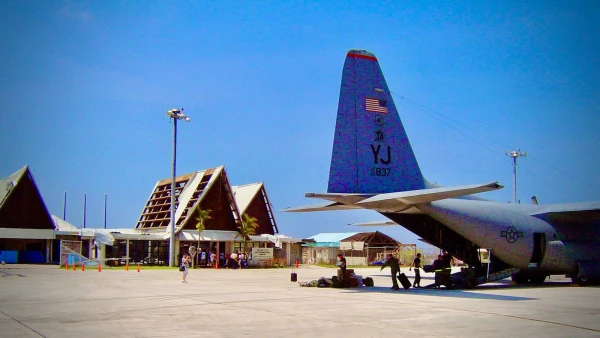
In a quiet corner of the Pacific, the sleepy Yap International Airport is undergoing a dramatic transformation—one that could reshape America’s military posture in the region as tensions with China escalate.
The United States is pouring hundreds of millions of dollars into expanding the runway and infrastructure at Yap, a remote Micronesian island roughly 500 miles east of the Philippines. The upgrades are part of the U.S. Air Force’s Agile Combat Employment (ACE) doctrine, a strategy designed to disperse aircraft and personnel across a network of smaller, harder-to-target bases. The goal? To reduce the military’s heavy reliance on Guam, which has become increasingly vulnerable to Chinese missile strikes in any potential conflict.
A Forgotten Island Reborn for War
Yap, a tiny island with a population of just 12,000, is best known for its stone money and WWII relics—crumbling Japanese airfields overgrown with jungle, rusted remnants of American Corsair fighters, and the skeletal remains of bombers lost decades ago. But now, the island’s strategic value is being rediscovered. The U.S. military plans to extend Yap’s single runway to accommodate larger aircraft, including fighter jets and transport planes, and construct new facilities to support rapid deployments.
"The knowledge that Yap Island's airport was soon to be transformed was surreal. The island is one of the remote islands in the Pacific and is difficult and expensive to reach."
Funding for the project is drawn from two key sources: the Federal Aviation Administration’s Airport Improvement Program and the Department of Defense’s military construction budget. The Air Force’s Fiscal Year 2025 request includes $400 million for runway extensions and related work, with the first $96 million already allocated. While some of that funding may also cover upgrades on Wake Island, the focus on Yap signals its growing importance in U.S. defense planning.
The Pacific’s New Military Chessboard
Yap is just one piece in a broader U.S. strategy to fortify the Pacific against Chinese aggression. Across the region, the military is rehabilitating and expanding airfields on Palau, the Northern Mariana Islands, and even Australia’s northern bases. The Second Island Chain—stretching from Japan to Indonesia—is becoming a critical front in the U.S.-China rivalry, with each side racing to outmaneuver the other.
China, for its part, is countering these moves by rapidly expanding its missile arsenal, including ballistic, cruise, and hypersonic weapons designed to neutralize U.S. airfields. The stakes are high: without Guam or alternative bases like Yap, America’s ability to project airpower in the Pacific would be severely diminished.
A Delicate Balance of Power
The U.S. relationship with Micronesia’s island nations is governed by the Compact of Free Association, which grants America exclusive access to their land and waters in exchange for defense guarantees and financial aid. While Washington holds ultimate responsibility for security, local governments are closely involved in the planning—ensuring that the military’s presence doesn’t come at the expense of sovereignty.
For now, Yap remains a backwater, accessible only via twice-weekly United Airlines flights from Guam. But in the coming years, it could become a linchpin in America’s Pacific defense strategy—a quiet outpost transformed into a frontline bastion against an increasingly assertive China.