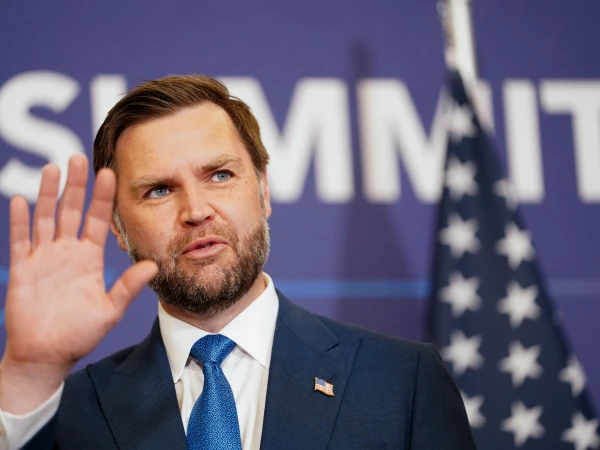
United States Vice President JD Vance has arrived in Switzerland for talks with Iranian officials on implementing an interim deal to end the US war with Iran. The negotiations, set to take place at the Buergenstock mountain resort, come after both sides agreed earlier this week to a 60-day ceasefire extension. However, the Islamic Revolutionary Guard Corps (IRGC) on Saturday announced the closure of the Strait of Hormuz in response to Israeli attacks in Lebanon, raising tensions just as talks were set to begin.
Switzerland's Federal Department of Foreign Affairs confirmed the talks would start on Sunday morning, with Vance leading the US delegation and Iranian chief negotiator Mohammad Bagher Ghalibaf heading Iran's team. Vance told reporters before departing that he hoped to make progress on both the nuclear issue and the Lebanon ceasefire.
Iran's Foreign Ministry Spokesperson Esmaeil Baghaei said a quadrilateral meeting between Iran, the US, Qatar, and Pakistan would be held later in the day, following separate meetings with mediators. The agenda is expected to prioritize the conflict in Lebanon, alongside frozen Iranian funds and oil sales.
Al Jazeera's Osama Bin Javaid reported from Buergenstock that both sides would try to bridge their positions. "The US immediately wants to go into the nuclear issue. The Iranians want an end to the fighting in Lebanon," he said.
The interim deal, brokered by Pakistan and signed by presidents Donald Trump and Masoud Pezeshkian, included a halt to fighting in Lebanon. But with Israel continuing attacks in Lebanon, the IRGC declared the Strait of Hormuz closed. The US military said 55 merchant ships transited the strait on Saturday, and CENTCOM vowed to ensure continued commercial traffic.
President Trump warned that no toll would be charged for passage through the strait during the ceasefire, but suggested the US might impose one if peace talks fail. Security analyst Wolfgang Pusztai cautioned Iran against overplaying the Strait of Hormuz card, noting that most ships passing through are heading to Asia, not the West.
Iranian officials have accused the US of failing to implement the interim deal's first clause, which calls for a ceasefire on all fronts, including Lebanon. Mohammad Mokhber, an adviser to Iran's supreme leader, warned that if the deal is not implemented, energy flow through the region would remain halted.
Al Jazeera's Resul Serdar Atas reported from Tehran that the Iranian delegation would focus on key articles of the memorandum of understanding, including the cessation of hostilities in Lebanon, lifting the maritime blockade, reopening the Strait of Hormuz, releasing frozen assets, and lifting sanctions on Iran's oil sector. The goal is to at least initiate implementation of these measures.
Lebanon remains a critical issue for Iran, as it seeks to maintain its regional influence and support for Hezbollah. The fragile truce in Lebanon appeared strained as Israeli forces continued attacks on Saturday, and Hezbollah announced retaliatory strikes against Israeli forces.
The outcome of the Swiss talks could determine whether the interim deal holds or unravels further.