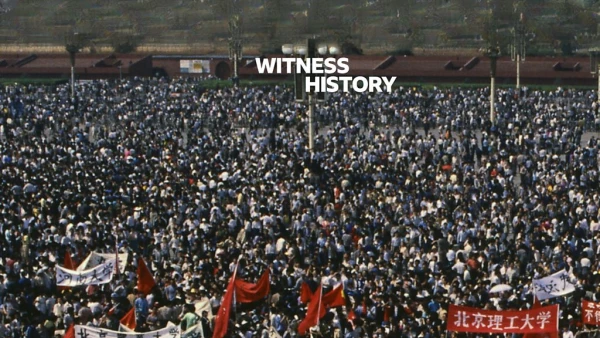
One month before the bloodshed in Beijing, a 10-kilometer line of protestors snaked through the city, marking what some believed was a turning point for democracy in China.
For over a decade, China had been opening up to global trade, and with greater economic freedoms came the promise that democratic rights might also be within reach. In an emotional testimony, student organizer Wu'er Kaixi explains why he thought the protests were encouraging leaders toward a more progressive China.
On May 4, 1989, with huge numbers in the streets, it was a moment when many dared to believe the fight for democracy could be won. But as Wu'er Kaixi tells Tom Bonnett, it was a brief high point. A month later, tanks and soldiers descended on the streets and sent a bloody message: protest would not be tolerated.
This account brings eye-witness stories to life through archive material, offering a glimpse into a pivotal moment in history.