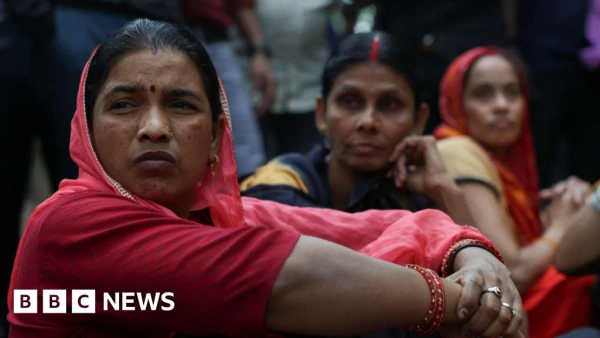
Thousands of factory workers in Noida, a key industrial hub near Delhi, have taken to the streets in escalating protests demanding higher wages and better working conditions. The demonstrations, which began peacefully about a week ago, have turned violent in some areas, with police deploying tear gas and making hundreds of arrests.
Most protesters are non-unionized contract laborers working in small factories that produce auto parts, electronics, and garments. They typically earn between 10,000 and 15,000 rupees monthly—wages that have remained stagnant for years while living costs soar. Many are migrant workers living in cramped housing on the city's outskirts, struggling to make ends meet.
"I pay 5,000 rupees in rent and spend another 4,000 on groceries and necessities," said one female worker who requested anonymity. "What do we save? Nothing. We just get by."
The unrest has been fueled by stark pay disparities between neighboring states. After similar demonstrations, Haryana recently implemented a 35% minimum wage increase. In response, the Uttar Pradesh government—where Noida is located—announced temporary wage hikes in two districts and promised further measures, but many workers say these increases are insufficient.
Factory worker Soni Singh told reporters his monthly income is about 13,000 rupees despite working 12 to 14 hours daily. He receives overtime pay for only three hours beyond his eight-hour shift, leaving his actual earnings far below what his labor should command.
Experts point to inconsistent enforcement of labor rules as a core issue. Minimum wages in India are set by individual states and vary widely by skill level and location, meaning similar work can be paid differently even within the same region. Although meant to be revised periodically, delays are common.
"The workers just don't trust their employers anymore," said Rajesh Kumar, a Delhi-based trade unionist. "Minimum wages have always existed, but not all employers comply with them. In most cases, workers have little choice but to accept this because jobs are scarce."
What makes these protests unusual is the absence of major trade union leadership, which typically guides labor movements in India. The demonstrations have also taken on political dimensions, with Uttar Pradesh Chief Minister Yogi Adityanath calling the violence a "conspiracy" to derail development, while opposition leader Rahul Gandhi has voiced support for the workers.
The protests reveal deeper strains in India's labor market despite economic growth. Government data shows approximately 90% of Indian workers earn less than 25,000 rupees monthly—roughly equivalent to minimum wages for skilled workers in Delhi, among the highest in the country. This highlights how low earnings remain for much of the workforce, particularly in India's vast informal sector, which employs over 310 million people with little job security.
For many households, wages haven't kept pace with rising living costs. Recent increases in cooking gas prices—linked to global supply disruptions from Middle East conflicts—have added further pressure. The discontent has spread beyond factory floors, with domestic workers in Noida also staging protests demanding higher wages and better access to housing, healthcare, and education for their children.
Rakhi Sehgal, an independent labor researcher, identifies a "cost of living crisis" as the common thread across recent protests, reflecting the widening gap between wages and basic necessities.
However, paying higher wages presents challenges for small businesses that form the backbone of India's manufacturing sector. These enterprises often operate on thin margins where even modest pay increases can strain finances.
"When labor comes together to demand a raise, we have to listen," said Vaibhav Gupta, who runs a plastic utensils factory in Delhi employing about 50 workers. "But that often means cutting into already thin margins or absorbing losses on existing purchase orders."
This creates a difficult bind for both sides. Labor rights activist Nikhil Dey explains that when small factories can't make other cost adjustments, "they tend to squeeze the workers' time and wages, leading to worker exploitation."
Frustration has also built around India's new labor codes, introduced last year to consolidate dozens of existing laws into four broader frameworks aimed at strengthening worker protections while simplifying compliance for employers. However, expectations haven't been fully met, according to Sehgal.
Some business leaders suggest the government should consider bearing social security costs for micro and small enterprises to help them comply with labor laws and reduce disputes. As the protests continue, they expose fundamental tensions in India's industrial system—between workers' need for livable wages and businesses' struggle to remain competitive in a challenging economic landscape.