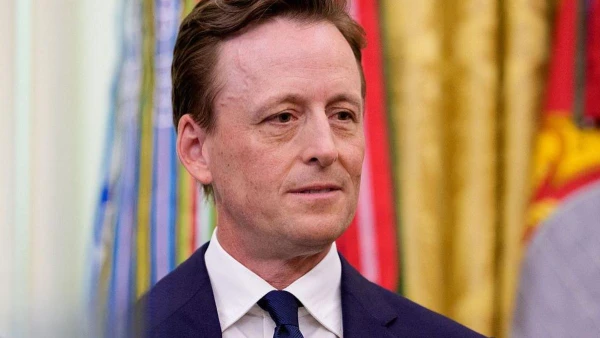
The Biden administration announced Tuesday that Kirsten Davies will serve as the nation’s new head of cybersecurity, taking the reins after a spate of high‑profile technology failures that exposed critical government systems.
Davies, a former senior official at the Cybersecurity and Infrastructure Security Agency (CISA) and a veteran of several public‑private cyber‑defense initiatives, is expected to overhaul the fragmented security architecture that has struggled to keep pace with increasingly sophisticated threats.
"The United States has a historic opportunity to dominate the cyber landscape for generations to come," Davies said in her inaugural remarks. "We will build a resilient, forward‑looking framework that safeguards our citizens, our economy, and our democratic institutions."
The appointment comes on the heels of recent incidents—including the ransomware hit on a major federal health agency, a supply‑chain breach that disrupted critical infrastructure, and a series of software glitches that left several government portals offline. Lawmakers have been pressing the White House for decisive action, warning that the country’s cyber posture has become a national security liability.
In her new role, Davies will coordinate across the Department of Homeland Security, the intelligence community, and private‑sector partners to standardize security protocols, accelerate threat‑intelligence sharing, and push for a rapid modernization of legacy systems.
"Our goal is not just to patch holes, but to create a proactive, adaptive defense that can anticipate the next wave of attacks," she added, emphasizing a shift from reactive firefighting to strategic resilience.
Analysts note that Davies' track record of building cross‑agency coalitions and her deep technical expertise could signal a turning point for U.S. cyber policy, potentially restoring confidence both at home and among international allies.
The administration expects her to present a comprehensive cybersecurity roadmap to Congress within the next 90 days, outlining budget priorities, talent acquisition strategies, and measures to tighten supply‑chain security.
The appointment underscores a growing recognition that robust cyber defenses are now as essential to national security as traditional military capabilities.