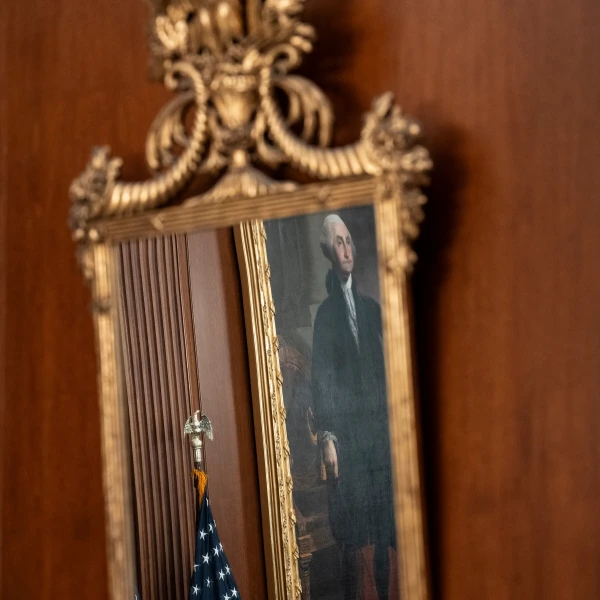
As America marks 250 years of independence, George Washington is celebrated for establishing the two-term presidential tradition—a legacy enshrined in the 22nd Amendment after Franklin Roosevelt's four terms. Yet historical records reveal Washington's motivation wasn't democratic principle but personal preservation: he found the presidency unbearable and couldn't wait to escape it.
Washington never aspired to political leadership. His service in Virginia's House of Burgesses and the Continental Congress stemmed from duty, not ambition. After leading the Continental Army to victory in the Revolutionary War, he happily relinquished command, planning to spend his remaining years in private retirement at Mount Vernon.
James Madison, however, had other plans. Desperate to lend credibility to the new constitutional framework, Madison persuaded Washington to attend the 1787 Constitutional Convention in Philadelphia. Washington served as convention president and publicly endorsed the final document, writing to the states: "We kept steadily in our view that which appears to us the greatest interest of every true American: the consolidation of our Union, in which is involved our prosperity, felicity, safety—perhaps our national existence."
Having declared the new government essential to America's survival, Washington found himself trapped. Madison, Alexander Hamilton, and nearly every Constitution supporter implored him to accept the presidency, arguing that only his prestige could give the fledgling government legitimacy.
Once in office, Washington discovered the presidency was destroying both his peace of mind and reputation. Newspapers mocked him, political battles exhausted him, and he watched his carefully cultivated public image deteriorate. Far from cherishing power, Washington counted the days until he could return to Mount Vernon, where he finally found the tranquility that had eluded him in the nation's highest office.
Washington's two-term precedent, now celebrated as a cornerstone of American democracy, was ultimately born not from political philosophy but from one man's desperate desire to preserve what remained of his sanity and standing.