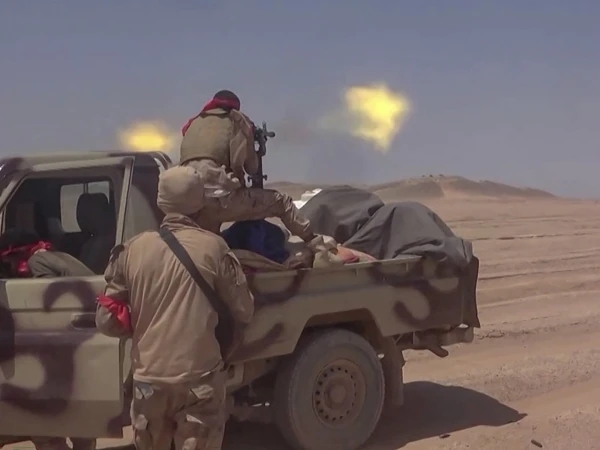
Yemen's internationally recognized government forces have successfully reclaimed key military outposts and strategic elevations just east of al-Hazm, the capital of the northern al-Jawf governorate. Following a fierce counteroffensive, the army’s 1st Emergency Brigade reported capturing significant caches of weapons and ammunition, alongside destroying Houthi armored vehicles and inflicting enemy casualties.
In contrast, Houthi forces maintain that they successfully repelled government pushes in both al-Jawf and the neighboring Marib region. The al-Jawf governorate remains a highly prized battleground due to its shared border with Saudi Arabia and its proximity to the Houthi strongholds of Sanaa and Saada. These latest military maneuvers fall under "Operation Dawn of Yemen," a broader offensive launched this past October aimed at reclaiming lands lost to the insurgent group since they first captured the capital, Sanaa, in 2014.
Violence has also flared across other fronts. Government troops reported successfully fending off Houthi assaults in al-Aqroudh, located southeast of the besieged city of Taiz, as well as in the Lahij governorate’s Tur al-Baha region. Concurrently, Houthi-aligned media claimed that dual airstrikes hit an oil facility in the Bajil district of the Hodeidah governorate.
As combat rages, the civilian toll continues to mount alarmingly, particularly in Taiz. While Houthi fighters do not occupy the city itself, they maintain a tight grip on all major entry and exit routes. This blockade has severely choked off essential deliveries of food, fuel, and medical supplies, pushing local hospitals to a breaking point. Fleeing the besieged city has become highly treacherous for civilians, with local reports citing sniper fire targeting those attempting to navigate the surrounding hillsides.
While local Yemeni media recently broadcasted the arrival of a critical medical aid convoy from Marib meant to treat the wounded and support displaced families, further relief shipments remain stalled by blocked roadways.
The broader humanitarian picture is grim: the UN Office for the Coordination of Humanitarian Affairs reports that over 290,000 individuals have been uprooted since hostilities intensified in August. Among the recently displaced are nearly 6,100 pregnant women, according to the UN Population Fund, with hundreds expected to give birth in the coming weeks. Furthermore, the UN Refugee Agency has raised alarms over the rapidly deteriorating living conditions for more than 65,000 refugees and asylum seekers trapped in the crossfire amid soaring inflation and disrupted public services.