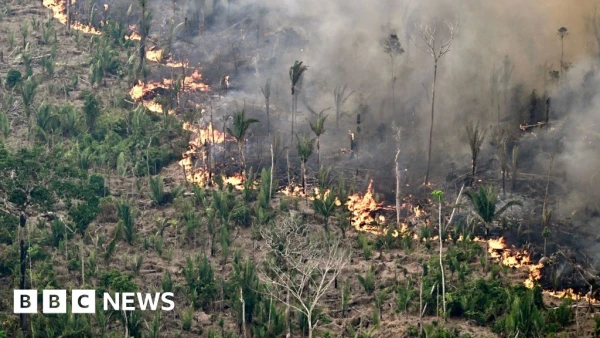
Global tropical forest loss slowed significantly in 2025, with new satellite data showing about 43,000 square kilometers of old-growth forests disappeared—roughly the size of Denmark. That represents a 36% decline from record losses in 2024, driven mainly by Brazil's strengthened environmental policies and law enforcement.
Excluding fire-related losses, Brazil lost an estimated 5,700 square kilometers of old-growth tropical forest last year, the lowest figure since tracking began in 2002. Researchers attribute the improvement to political will and targeted conservation efforts.
However, scientists warn that tropical forests remain under severe pressure. The combination of human-caused climate change and the anticipated return of the El Niño weather pattern later this year could increase the frequency and intensity of wildfires.
"Climate change and land clearing have shortened the fuse on global forest fires," said Professor Matthew Hansen of the University of Maryland. "Without urgent action to manage fire more effectively, we risk pushing the world's most important forests past recovery."
The data, analyzed by the World Resources Institute and the University of Maryland, carries some uncertainty due to satellite detection lags, but the overall trend is clear. While 2024 saw unprecedented fire activity linked to El Niño, 2025 benefited from cooler La Niña conditions that tempered fire risk.
World leaders pledged to "halt and reverse" forest loss by 2030 at the COP26 summit in Glasgow. Despite recent progress, the pace of deforestation remains far above sustainable levels. Tropical rainforests are critical for biodiversity and carbon storage, absorbing vast quantities of CO₂ when healthy.