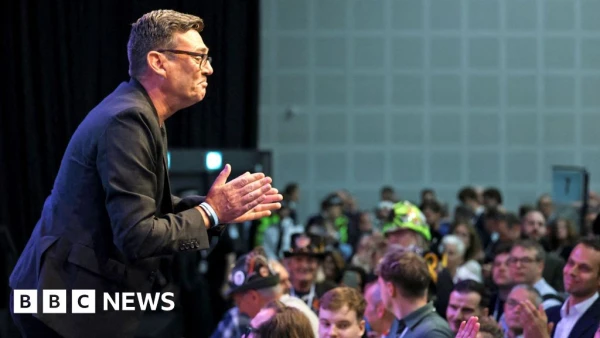
Andy Burnham's decisive victory in the Makerfield by-election has elevated him as a potential challenger to Sir Keir Starmer for the Labour leadership and ultimately the premiership. During his campaign, Burnham outlined several key policy proposals, though many details remain vague.
Fiscal Discipline Burnham has pledged to adhere to Chancellor Rachel Reeves' economic rules, signaling no large increase in borrowing. He also commits to Labour's manifesto promise not to raise main rates of income tax, VAT, or National Insurance, limiting his tax-raising options.
Helen Miller of the Institute for Fiscal Studies notes, "Whoever is prime minister will find very limited scope to increase spending without cuts or tax rises."
Public Control of Utilities Burnham advocates bringing water utilities under "stronger public control," citing the Greater Manchester bus network model of public oversight with private operation. He specifically supports nationalizing Thames Water, aiming to reduce water and energy bills. The government estimates full water nationalization would cost £100bn, though some think tanks dispute this. For rail, Burnham favors gradual public ownership as contracts expire, reducing upfront costs.
Social Care Reform A long-time advocate, Burnham proposed replacing inheritance tax with a "national care levy" to fund free care, with the wealthiest paying more. He hasn't retreated from this stance but hasn't specified the levy's revenue. The Health Foundation estimates a universal care model could cost £17bn annually by 2035/36, while a Scottish-style basic protection model would cost £7bn in England.
Housing Expansion Burnham calls for the "biggest council house building program since WWII," funded by redirecting the existing £39bn affordable housing program entirely to social rent homes.
HS2 Northern Leg He proposes resurrecting the Birmingham-to-Manchester HS2 leg, scrapped in 2023 at an estimated £36bn cost. Burnham suggests recouping costs by capturing land value increases near stations, though the method's feasibility is unclear. The IFS notes similar projects like Crossrail used additional business rates or developer contributions, but this isn't "new money."
Business Rate Cuts Burnham promises a 20% cut in business rates for pubs and music venues, funded by higher taxes on out-of-town warehouses used by online retailers like Amazon. He also wants to raise the tax-free threshold for small shops.
Education and Apprenticeships He emphasizes vocational training, aiming to balance academic and technical paths, with more work placements and apprenticeships for 16-18 year olds.
National Insurance Burnham criticizes the increase in employer National Insurance from Reeves' 2024 Budget, which the OBR forecasts to raise £16.1bn by 2029/30. He doesn't commit to a full reversal but suggests partial rollback.
Defense Spending Following Defense Secretary John Healey's resignation over inadequate funding, Burnham advocates reforming public investment and procurement, and reducing the welfare bill to free up defense funds, stating, "I am not squeamish about saying the plan would be to reduce the welfare bill."