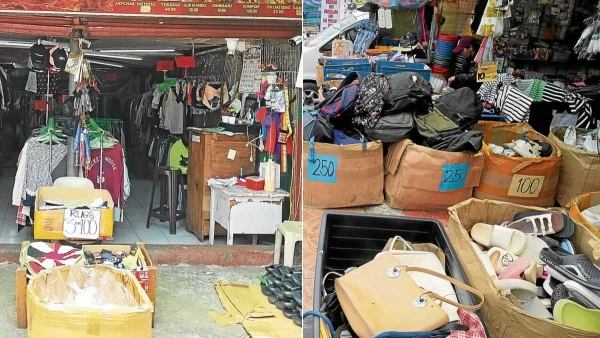
Baguio City is leveraging its deep-rooted thrift culture to pioneer a sustainable urban lifestyle, branded as "Pansa-nopen"—an Ibaloy term meaning "coming together for a shared purpose." This initiative, formalized under Ordinance No. 15 of 2026, aims to transform waste management through community-driven recycling and repurposing.
For decades, Baguio has been synonymous with "wagwagan" or thrift stores, which emerged in the late 1970s from surplus sales at the former John Hay Air Station. These shops, popularized by celebrities in the early 2000s, evolved into hubs for secondhand garments from overseas Filipino workers. Today, they attract Generation Z shoppers and serve as a foundation for the city's circular economy, where waste is minimized through reuse.
Architect Donna Tabangin, the city planning officer, explains that "Pansa-nopen" reflects long-standing practices. "Many households reuse containers—from biscuit tins to ice cream tubs—for storage or even rainwater collection," she says. The concept also draws from indigenous traditions, such as in Barangay Happy Hallow, where residents use every part of the taro plant to ensure nothing is wasted.
However, Baguio faces mounting environmental challenges. Overdevelopment and population growth have strained waste management, with the city spending approximately ₱200 million annually to transport waste to landfills. Data shows daily waste increasing from 593.28 tons in 2023 to a projected 598.42 tons by 2032, breaching capacity thresholds since 1994.
A 2022 study offers hope: about 30% of waste is recyclable and 35.9% biodegradable, indicating significant potential for diversion. In response, barangays are being equipped with recycling facilities, and the city recently introduced "circular tourism" to the business sector in a summit with the United Nations.
Mayor Benjamin Magalong's "Pansa-nopen" campaign seeks to unite residents in repurposing everyday items, turning a tradition of thrift into a model for sustainable urban living.