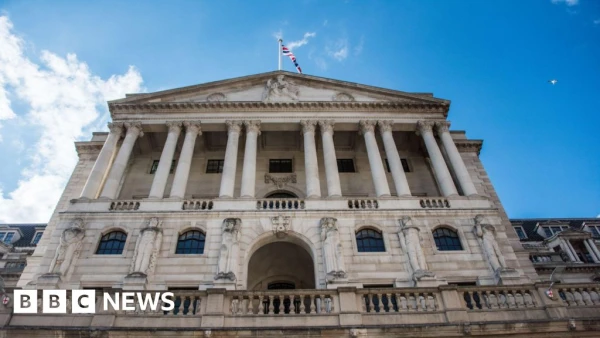
The Bank of England is widely expected to keep its benchmark interest rate at 3.75% on Thursday, as the Monetary Policy Committee (MPC) navigates economic uncertainty stemming from the ongoing conflict in the Middle East.
Analysts predict no change, citing strong signals from the Bank that it needs more time to assess the impact of the Iran war on the UK economy and inflation. The annual inflation rate remains above the 2% target at 3.3%, and the MPC is expected to proceed cautiously.
"The repercussions of the conflict are still keenly felt, and uncertainty about how the situation could evolve remains high," said Sandra Horsfield, an economist at Investec. "These will be key points the MPC will have to consider."
The decision is due at 12:00 BST, followed by the publication of the Bank's first full monetary policy report and economic forecasts since US-Israeli strikes on Iran began in late February. The Bank is unlikely to offer firm guidance on future rate moves.
Before the conflict, economists had expected inflation and interest rates to fall further this year. Now, some commentators suggest rate rises remain possible, while others anticipate no change for the foreseeable future.
The war has already pushed up mortgage costs for homeowners on new fixed deals. Average two-year fixed mortgage rates rose from 4.83% at the conflict's start to a peak of 5.90%, before easing slightly to 5.81%, according to Moneyfacts. Several lenders have announced cuts in the past 24 hours, but brokers warn that further fixed-rate increases in the coming weeks cannot be ruled out.
Aaron Strutt of Trinity Financial advised: "Secure a mortgage rate that suits your circumstances as soon as you can, then try to switch to a cheaper deal with your lender before completion."
Savers are also watching closely. Around half of UK savings accounts offer rates above the current 3.75% benchmark, but long-standing customers often get poor deals. Rising prices erode the purchasing power of savings, especially if interest rates are low.
The MPC's decision will affect borrowers, savers, and business investment and hiring plans.