The sun's descent into the horizon paints the sky with hues of pink, orange, and blue, yet the heat and humidity persist, casting a sweltering shadow over Barcelona's El Raval neighbourhood.
A group of Pakistani women, donning colourful, breezy attire, seek refuge from the scorching heat at the water's edge on Barcelona's beach. The sound of music from a speaker and the gentle wash of the waves over the wet sand provide a fleeting respite from the oppressive temperatures. Meanwhile, the city grapples with the aftermath of its record-breaking heatwave, which saw temperatures soar to 40.7C (105F) on July 8.
The consequences of this heatwave are stark, with an estimated 205 heat-related deaths recorded in the wider Barcelona province since the start of the month. A study published in Nature Medicine last year projected that, in a worst-case scenario, the city could witness over 246,000 heat-attributable deaths between 2015 and 2099, primarily due to its Mediterranean location and urban density.
El Raval: A Neighbourhood on the Brink
El Raval, situated in the city's old town, is particularly vulnerable to the heat, especially at night. The Climate Vulnerability Index (IVAC) ranks it as the most 'heat-vulnerable' neighbourhood in Barcelona. This is largely attributed to its high population density, low median annual income of 15,050 euros, and scarcity of green spaces.
Furthermore, a significant proportion of homes in El Raval lack thermal insulation and cross-ventilation, exacerbating the heat. The neighbourhood is also home to a high percentage of migrant residents, with 67% of its population born abroad, primarily from Pakistan, the Philippines, and India.
A Beacon of Hope
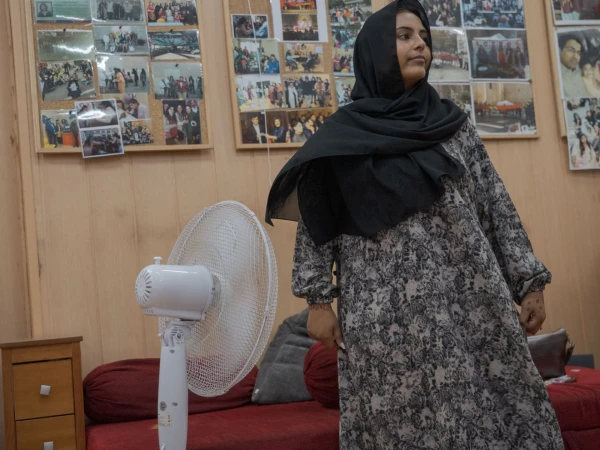
In the midst of this sweltering landscape, the Cultural, Educational and Social Association of Pakistani Women (ACESOP) offers a refuge from the heat. Every Friday, migrant women gather at the society's hall, sharing meals and supporting one another. The centre's founder, Huma Jamshed Bashir, notes that many community members seek respite in air-conditioned shopping centres or at the beach, often staying until sleep overcomes them.
The lack of relief from the heat at night is a pressing concern. By July 20, Barcelona had already recorded 25 tropical nights and 25 'torridas' nights, with temperatures showing no signs of abating. For residents like Reena Mazhar, who shares a small flat with four others and has no fan, the heat is unbearable. 'All I can do is keep wetting myself down, taking showers, or leaving the house in search of somewhere I can breathe,' she says.
The Struggle for Relief
Barcelona operates around 500 climate shelters, including libraries, museums, and parks, which provide temporary respite from the heat. However, these shelters have limitations, with many closing after dark. A study by the Polytechnic University of Catalonia found that only 15% of the elderly population has access to a shelter within a 10-minute walk at night.
Architect Blanca Arellano Ramos emphasizes that the quality of these shelters is crucial, requiring a place to sit, access to water, and washing facilities. For elderly residents like Margarita Medina, who lives alone and suffers from a lung condition, the heat is particularly debilitating. 'I don't have enough oxygen in my lungs, so I really do suffer in the heat,' she says.
As the temperature continues to rise, the residents of El Raval are left to face the daunting consequences of a city ill-equipped to handle the extremes of climate change.